AI Music Is Getting Good Enough to Start an Argument
The question used to be whether AI could make a song. That debate is over. The question now is more interesting: what part of the work stays yours?
Tools like Suno have moved past rough demos into full productions with vocals, arrangement control, stem editing, and export at quality levels that would have seemed implausible three years ago. The bundled workflow available to a solo creator today includes song generation, covers, translation and dubbing, AI-generated artwork, lyric videos, and short clips formatted for social platforms. You can go from an idea to a distributable package without touching a traditional instrument or booking studio time.
That is genuinely new. It is also where the creative question gets complicated.
What the tools actually do now
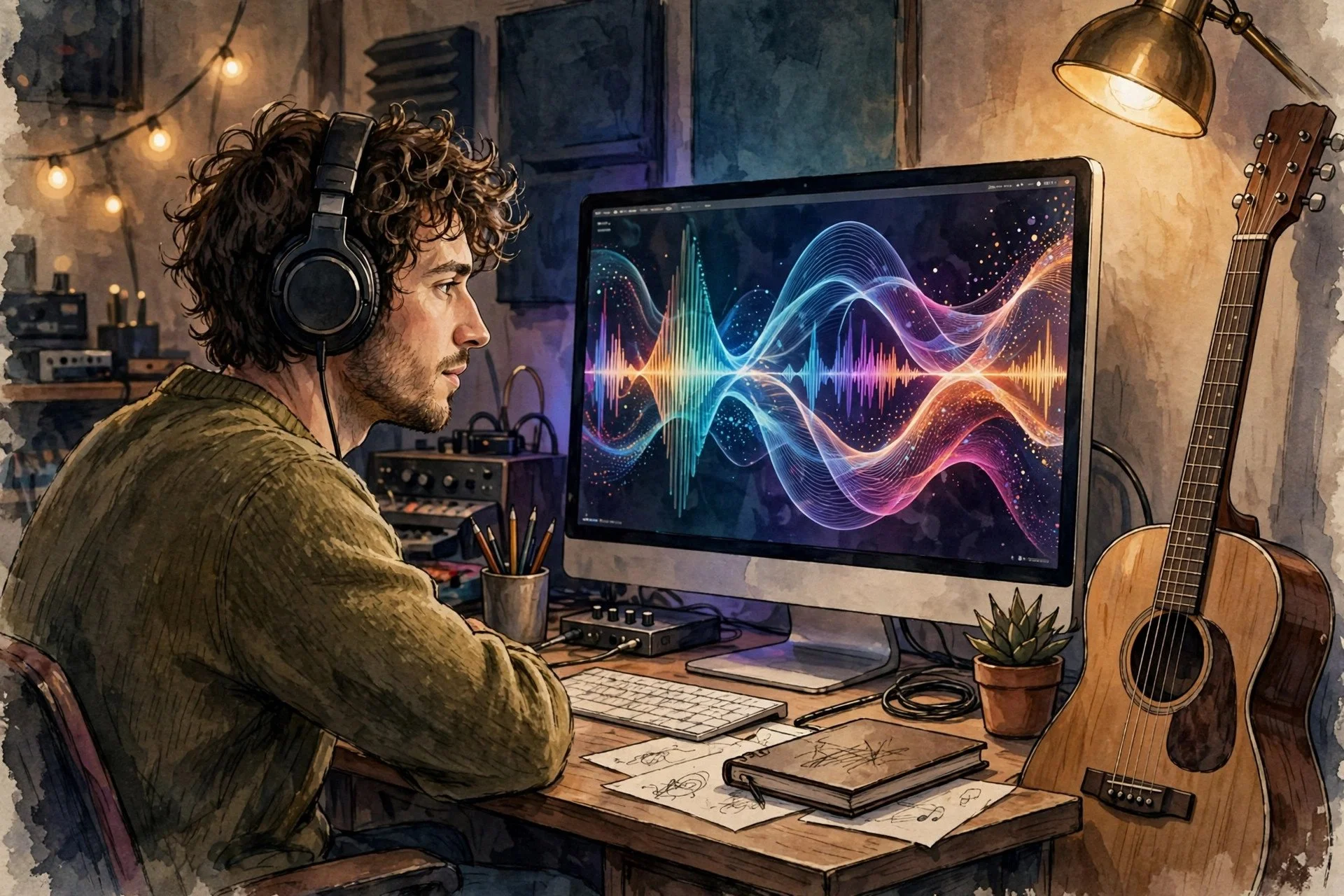
The current generation of AI music tools handles more of the production chain than most people outside music circles realize. Feed a prompt or a melodic idea into a platform and you can get back a fully arranged track with a lead vocal, backing harmonies, and mixed stems you can pull apart and work with. Adjust the tempo, swap the genre, isolate the drums, regenerate the chorus. The iteration loop is fast enough that you can run through dozens of variations in an afternoon.
The bundled creator workflows go further. The same session that generates your track can produce translated versions for different markets, AI-voiced covers in other styles, accompanying artwork, and short-form video clips sized for the platforms where music actually gets discovered today.
For a solo artist or a small team, this is a significant compression of what used to require either money or time or both. It is also a situation that rewards clarity about what you are actually doing with these tools, because "I used AI" covers a lot of ground.
The authorship question
Using AI to generate a full track from a text prompt and uploading it with your name on it is one thing. Using AI to sketch chord progressions you then rewrite, generate lyric drafts you revise, or produce a reference mix you hand to a human producer is a different thing. Both use the same tools. They are not the same creative act.
The authorship question is worth taking seriously for practical reasons, not moral ones. If you are building an audience around your work, that audience is building a relationship with something. The more specific that something is, the more durable the relationship tends to be. AI tools are very good at producing work that sounds like a lot of music at once. Your job, if you want to be someone rather than just something, is to make choices that narrow it into a point of view.
That is not a limitation of AI. It is a description of what creative judgment actually is.
Using AI as a sketchbook
The most useful frame for AI music tools, especially if you are a working musician, is the sketchbook. A sketchbook is not the finished work. It is where you find out what you think before you commit.
Use generation tools to explore territory you would not have tried otherwise. Prompt toward a genre you have never worked in and see what you learn from the result. Generate ten rough chorus ideas in a sitting and pay attention to what bothers you about each one. Let the tool show you what the obvious version of your idea sounds like, so you can make something less obvious.
The constraint is that a sketchbook only works if you are the one editing it. Generation is fast and easy. Selection is hard. What do you keep, what do you throw away, and why? That is the work. The AI does not know which of its outputs is interesting. You do.
Where human judgment matters most
Stem editing is where the real creative leverage sits right now. Most platforms let you pull apart a generated track into its component layers: vocals, bass, drums, melody, pads. What you do with those stems is entirely up to you.
A generated drum pattern underneath your own bass line is a different thing than a fully generated track. A generated chord progression played on your actual instrument, with your timing and touch, is different again. These combinations are not cheating. They are production technique, the same way sampling was production technique. The question is whether the result sounds like something you could not have made otherwise, and whether the choices that got you there were yours.
Performance and story are harder for AI to replace, and not because the technology is not capable. An AI can generate something that sounds like a performance. It cannot have had a bad year, changed its mind about something, or lost someone. Those experiences are not content that goes into a song. They are the reason a specific song sounds like it means something. That distinction matters more as the tools get better, not less.
Rights and responsibility
Before you release anything made with AI tools commercially, read the terms of your specific plan carefully. Licensing and commercial-use rights vary significantly by platform and tier, and they change. What is permitted on a free plan may be different from what a paid plan allows. Some platforms claim ownership or licensing rights over generated content. Others grant full commercial rights to paying subscribers. Some have restrictions on distribution through major streaming platforms.
This is not a legal opinion. It is a reminder that "I made it with AI" is not a complete answer to questions about who owns what and what you are allowed to do with it. Check the terms that apply to your account, check them again when you upgrade or the platform updates its policies, and keep records of which version of a tool generated a specific piece of work if you plan to release it.
The responsibility question has the same shape as the accountability question in every other part of AI: the tool generates, but the decision to publish belongs to the person whose name is on the release.
What to do
AI music tools are worth using. Here is how to use them in a way that keeps the creative work yours.
Use generation for exploration, not output. Generate a lot. Keep a little. The selection process is where your taste lives.
Work with stems, not just finished tracks. Pulling apart a generated track and rebuilding it with your own elements is a fundamentally different kind of authorship than uploading the output unchanged.
Edit everything before it leaves. A lyric you rewrote is yours. A chord progression you played is yours. The more hands you put on the material, the more it reflects your judgment.
Be specific about what AI did. You do not have to confess everything to your audience, but being clear in your own mind about which parts were generated and which were chosen or created by you will help you make better decisions about what to release.
Check your plan's licensing terms before you distribute commercially. Rights vary by platform, by tier, and over time. Read the current terms, not a summary of them.
Use the tools where they compress effort without compressing authorship. AI is good at reference mixes, rough arrangements, lyric drafts, and artwork. It is less good at knowing what you are trying to say.
The argument about AI music is going to continue. The more useful question, for anyone making music right now, is which decisions you are keeping for yourself.