AI Needs $6 Trillion a Year. It Has Maybe $1.8 Trillion.

AI Needs $6 Trillion a Year. It Has Maybe $1.8 Trillion
The companies building artificial intelligence are pouring money into infrastructure at a pace that has no real precedent in the technology industry. According to a new report from Bain & Company, sustaining that pace will require the AI market to generate roughly $6 trillion in annual revenue by 2031. Right now, reasonable estimates put the industry on a path to perhaps $1.8 trillion. The gap between those two numbers is the central economic tension of the AI era, and it will shape what you pay, what products survive, and where the electricity bill for your nearest data center ends up.
Bain's 2026 Global Technology Report, the firm's seventh annual edition, was released on September 29. It is worth reading carefully, because the $6 trillion figure is not a prediction. It is a requirement, and there is a difference.
Where the $6 Trillion Number Comes From
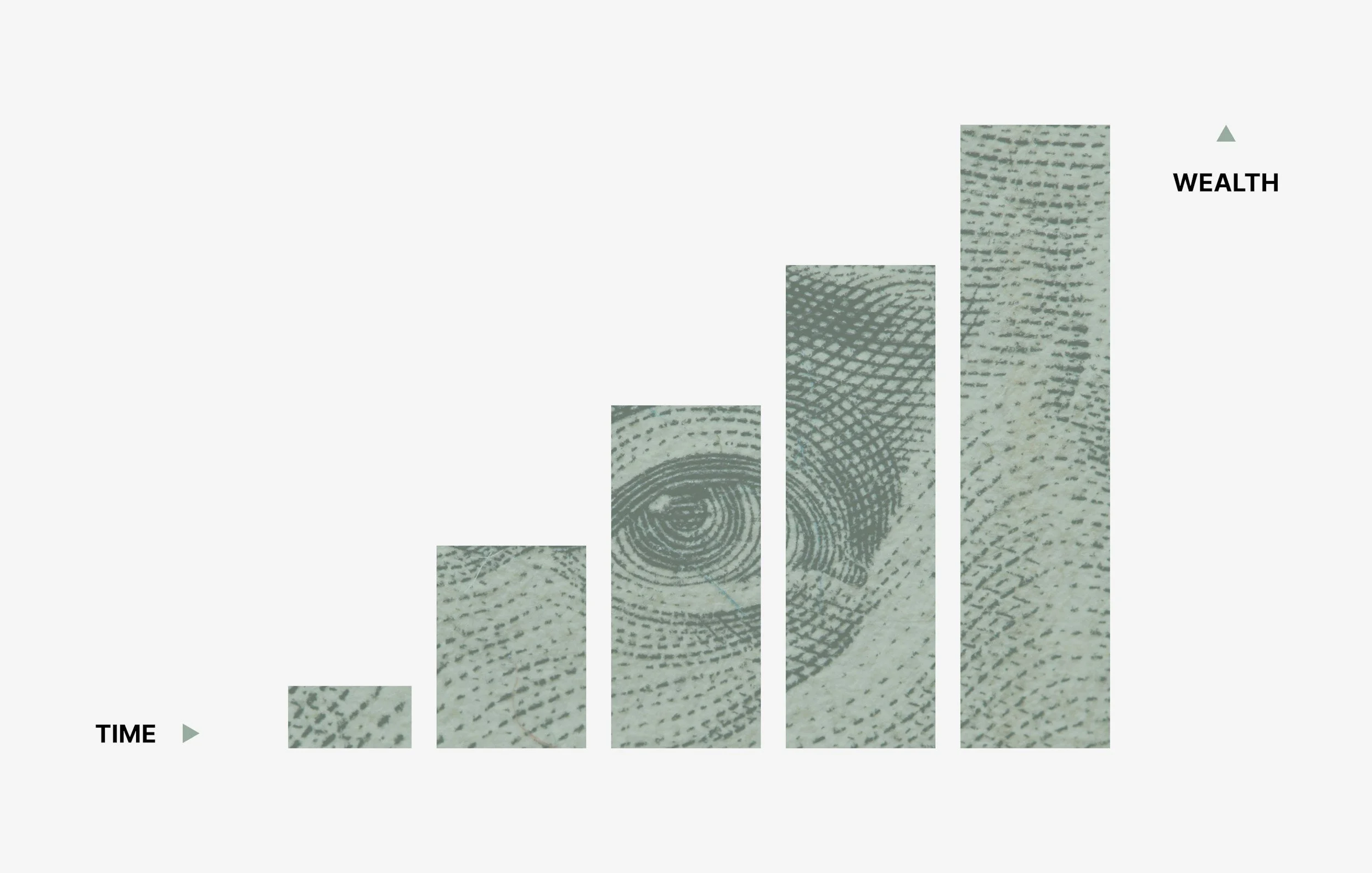
Where the $6 Trillion Number Comes FromThe math is straightforward once you see the underlying assumption. Bain estimates that annual AI infrastructure spending, covering new data centers, compute hardware, and upgrades to installed GPUs, memory, and networking gear, could reach $1.5 trillion by 2031. The firm then applies an industry rule of thumb: capital expenditure typically runs at about 25 percent of a company's revenue. That ratio is already ambitious; Bain calls it aggressive but reasonable based on trends among the major cloud providers.
Divide $1.5 trillion by 0.25 and you get roughly $6 trillion. That is the annual revenue the AI industry as a whole would need to sustain the buildout without destroying its own finances.
The report is careful on this point, and readers should be too. The $6 trillion is not a forecast of revenue the industry expects to earn. It is the revenue the industry would need to earn to justify the spending it is already committing to. Those are very different claims.
What Exists Today, and What Is Missing
Bain's analysts ran through the revenue sources they consider reasonably visible and sized them up:
Consumer AI (subscriptions, advertising): $200 billion to $400 billion by 2031
Enterprise AI (software development, sales, marketing, customer service, IT operations): $1 trillion to $1.4 trillion by 2031
Combined existing path: $1.2 trillion to $1.8 trillion
That gap, at least $4.2 trillion, has to come from markets that are either small today or do not yet exist.
Bain identifies four candidate areas. Three of them come with rough estimates: AI-enhanced search and advertising could add $100 billion to $200 billion or more as chatbots displace traditional search and start carrying ads. Autonomous vehicles, trucks, drones, and industrial automation together could contribute about $400 billion. Physical AI, a category that includes factory simulations, digital twins, and robotics, could reach about $900 billion, under the assumption that AI cuts research and manufacturing costs by roughly 10 percent.
Add those three together and you get somewhere around $1.4 trillion to $1.5 trillion. Combined with the existing consumer and enterprise base, you approach $3 trillion under an optimistic scenario. The remaining gap, another $3 trillion or more, is territory Bain acknowledges but does not size: AI-driven drug discovery, mental health applications, materials science, and new energy generation. These markets are real possibilities. They are not certainties, and the report does not pretend otherwise.
The Spending Is Already Happening

Capital spending by the five hyperscalers, Microsoft, Alphabet, Amazon, Meta, and Oracle, could reach $780 billion in 2026 alone. That figure is nearly five times what those companies were spending just three years earlier.
Bain projects $5 trillion to $6.5 trillion in cumulative data center spending between now and 2030, adding at least 150 gigawatts of capacity. Data center sizes and costs are doubling roughly every 12 to 16 months, driven by chip prices (Nvidia and SK Hynix among others) and the cost of networking gear. The physical constraints are beginning to bite: US projects worth $68 billion were blocked or delayed in the second quarter of 2026 because of shortages in transformers, water, and power, combined with local opposition to new sites.
The companies building this infrastructure are not waiting for the revenue to arrive first. They are betting it will.
"AI infrastructure is being built well ahead of the demand curve, and funding it sustainably will require adding approximately 1% to the annual global GDP growth rate."
David Crawford, Chairman of Bain's Global Technology Practice
To give that number scale: global GDP is roughly $110 trillion. Adding one percent means finding and sustaining an extra $1.1 trillion in economic activity, attributable to AI, every year.
Crawford was equally direct about where the industry's attention needs to shift. "The debate today is fixated on employee productivity," he said. "The economics of AI infrastructure demand trillions in new revenue beyond productivity gains." And on the scale of the innovation required: "What the industry needs is a wave of innovation that will dwarf what mobile and cloud unlocked."
One telling detail from the report: last year, Bain's same 25-percent capex model produced a required-revenue figure of $2 trillion, with a 2030 horizon. In a single year, the underlying spending estimate tripled, the required-revenue figure tripled in step, and the deadline moved out by a year. The numbers are not stable.
How to Read This as a Subscriber, a User, or Someone Who Lives Near a Data Center

Numbers like $6 trillion tend to produce one of two reactions: awe or dismissal. Neither is useful. Here is a more practical frame.
The capex-to-revenue ratio is a diagnostic tool. When a company is spending 25 cents of every revenue dollar on capital infrastructure, it is in a growth phase that depends on the revenue catching up. If revenue doesn't grow fast enough, the company cuts the spending, cuts the products, or raises the prices. Often all three. This ratio is public information for any company that files financial statements. You can track it.
Subscription prices are a pressure valve. When the revenue math is stressed, the first thing that often changes is pricing. Free tiers get narrower. Entry-level tiers lose features. Premium tiers go up. This is not a prediction about any specific company. It is a structural observation: AI services have high and rising infrastructure costs. If the broader market doesn't grow fast enough to absorb those costs, individual products will find ways to pass them along.
Free tiers tell you where a company stands. A company that is expanding its free tier is either well-funded, aggressively competing for users, or both. A company that is quietly shrinking it is under margin pressure. Watch the changelog, not just the marketing.
Products shut down when the revenue doesn't arrive. Every AI product that exists today was built on a bet that the revenue would materialize. Some bets won't pay off. The products most exposed are those in the newer, less-proven revenue categories: autonomous systems, physical AI, early-stage drug discovery tools. If a product you rely on is in one of these categories, it is worth asking whether the company behind it has a plausible revenue path or is simply spending on the belief that one will emerge.
Electricity costs are a local issue, not just an industry one. Each new data center puts pressure on regional power grids. The shortages that delayed $68 billion in US projects in the second quarter weren't abstract; they involved real communities weighing the jobs and tax base against the power draw, water use, and physical footprint. If a major data center is planned or under construction in your area, the utility rate structure is worth watching. Industrial-scale electricity demand affects residential pricing in ways that take time to show up but do show up.
The Bain report doesn't predict failure or success for the AI industry. It identifies the size of the bet being placed, with precision. The industry needs revenues that are more than three times what it can currently see. Whether those revenues arrive in the right forms, from the right markets, on a timeline that matches the infrastructure spending, is the open question the next several years will answer.
Sources and further reading:
Moneyweb: AI faces $6 trillion test to justify data centres, Bain says](https://www.moneyweb.co.za/news/ai/ai-faces-6trn-test-to-justify-data-centres-bain-says/)
AI Stock Wire: Bain AI $6 trillion revenue 2031 infrastructure buildout, September 2026](https://aistockwire.com/blog/bain-ai-6-trillion-revenue-2031-infrastructure-buildout-tember-2026)
The Hindu BusinessLine: AI market must touch $6 trillion by 2031 annually to fund infra build-out](https://www.thehindubusinessline.com/info-tech/ai-market-must-touch-6-trillion-by-2031-annually-to-fund-infra-build-out-report/article71523534.ece/amp/)