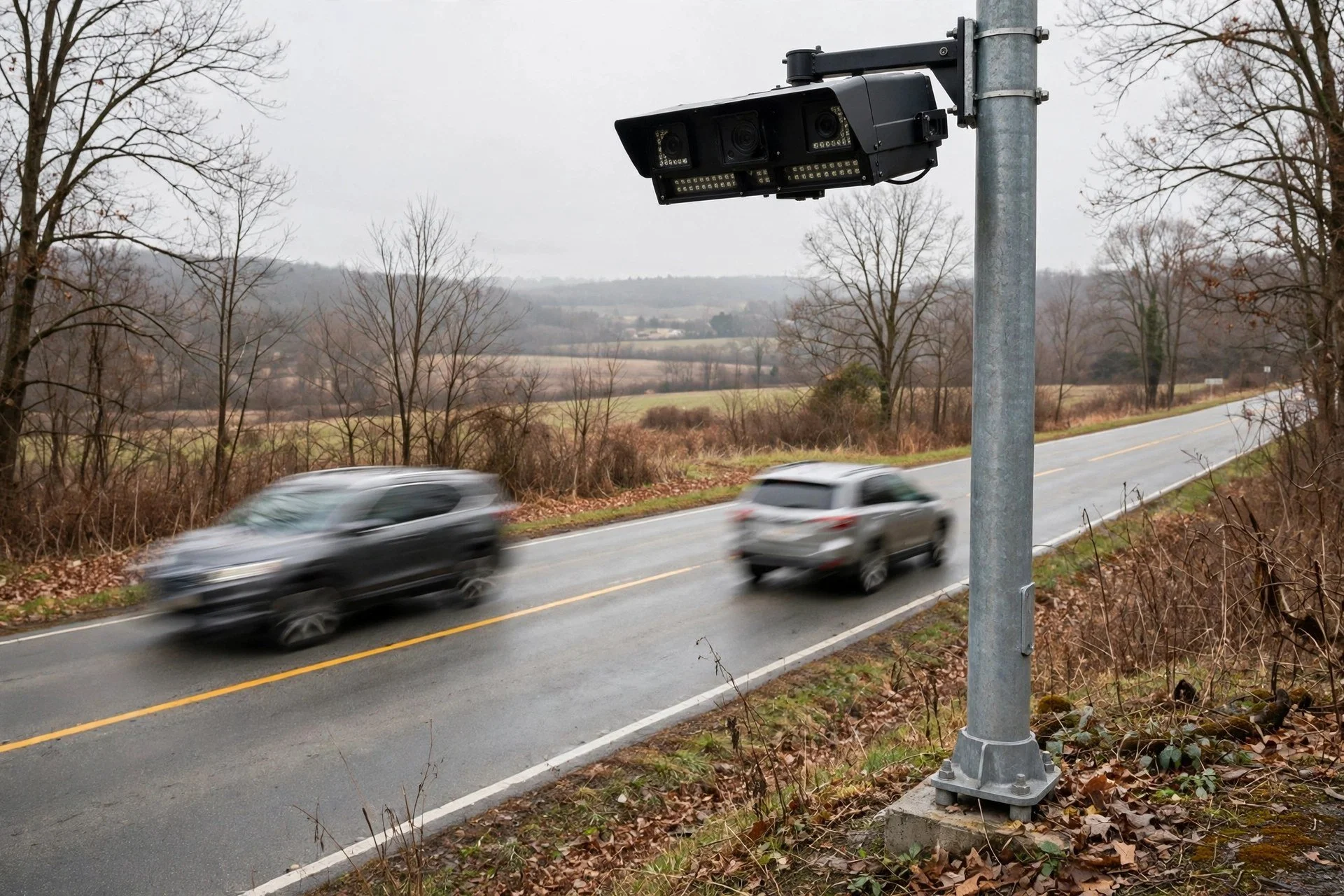
Sixty-five county cameras, and no statewide rules.
By June Mercer | November 11, 2026
New York has no uniform rules for automatic license plate readers. That gap became the official subject of state scrutiny this week, when lawmakers gathered in Albany to hear from prosecutors and civil-liberties advocates on opposite sides of the question.
The state Assembly's Consumer Affairs and Protection Committee held a public hearing at 11 a.m. on November 9 in Hearing Room B of the Legislative Office Building. The hearing examined how ALPR systems collect, store, and share data. ALPR technology uses cameras and computer software to scan license plates and check them against law-enforcement databases in real time. Chair Nily Rozic, a Democrat from Fresh Meadows, said New York currently has no universal minimum standards for data collection, retention, or use. Oral testimony was by invitation only.
Prosecutors and Civil-Liberties Advocates Reached Opposite Conclusions
The hearing drew sharp disagreement. Ray Tierney, the Suffolk County district attorney, testified that license plate readers are valuable law enforcement tools and urged lawmakers not to ban police access, Newsday reported. Ari Brown, a Republican from Cedarhurst, expressed support for law enforcement but said the readers raise constitutional questions.
Prosecutors more broadly pushed back against restrictions. The New York Law Journal reported that law enforcement witnesses urged legislators to preserve police access to ALPR data. A class action already pending in Westchester County is challenging mass vehicle surveillance under the state Constitution, the Law Journal noted.
Flock has deployed cameras at more than 700 locations on Long Island alone, according to Newsday. That scale has generated local pressure. Last week a Southold councilwoman urged her town to end its Flock agreement, Newsday reported.
Dutchess County Acted First, and Found the Limits of Local Authority
Dutchess County moved ahead of the state hearing. On October 13, the county Legislature voted unanimously to require that any Flock cameras still installed as of November 1 be covered with "opaque, non-damaging material," the Highlands Current reported. The vote came after a rapid shift in county leadership's position.
On September 23, Legislator Eric Andrews hosted a community forum in Pleasant Valley. Thirty residents spoke against the cameras. Two days later, on September 25, Sheriff Kirk Imperati and District Attorney Anthony Parisi announced they no longer supported the county's use of Flock cameras.
The county attorney had sent Flock a demand notice on September 30, giving the company an October 30 deadline to remove the cameras. County Executive Sue Serino allowed the covering mandate to become law without her signature. She said "proper steps to remove these cameras are already underway," the Highlands Current reported.
The vote applied to 65 county-owned cameras. It did not reach the other 372. Those cameras sit on private land or roads controlled by the state and individual municipalities, including Beacon, which has seven. The county Legislature has no jurisdiction over them.
What 30 Days of Scanning Looks Like
The data from Dutchess's own cameras illustrates the volume these systems generate. In the 30 days before October 14, the county's cameras logged 435,928 license plate scans. Those scans produced 41,320 hits, matches flagged by the National Crime Information Center, the National Center for Missing and Exploited Children, or New York State databases for suspended registrations, the Highlands Current reported.
That works out to roughly 14,500 plate reads per day, from a camera network that covered only a fraction of the roads in the county.
Albany Heard Testimony. No Legislation Followed.
The November 9 hearing was a listening session. Rozic's committee gathered testimony; no legislation emerged from the room that day. Whether New York adopts minimum standards for data retention, limits law enforcement access, or leaves current practice unchanged remains open.
Dutchess remains in a similar limbo. The 65 county-owned cameras are covered. The 372 on private land and state and municipal roads are not. The county attorney's October 30 deadline told Flock to remove the county-owned cameras, but the Highlands Current's reporting did not confirm removal had been completed by that date.
The state hearing, the Westchester lawsuit, and Dutchess County's experience all point to the same gap: plate-reader technology that spread faster than the rules governing it. The Assembly's official hearing notice framed the November 9 session as an examination of automatic license plate reader systems and the safeguards, if any, that should govern them.
Sources
- NY Assembly Committee on Consumer Affairs and Protection, Public Hearing on ALPR Systems (Nov. 9, 2026)
- Newsday: Automated license plate readers – state lawmakers weigh rules
- New York Law Journal: NY Lawmakers Weigh License Plate Reader Rules Amid Constitutional Challenge (Nov. 9, 2026)
- Highlands Current: Dutchess Votes to Cover Flock Cameras (Oct. 16, 2026)