Counted, or not.
By Mara Quinn | November 17, 2026
A Count That Carries Consequences
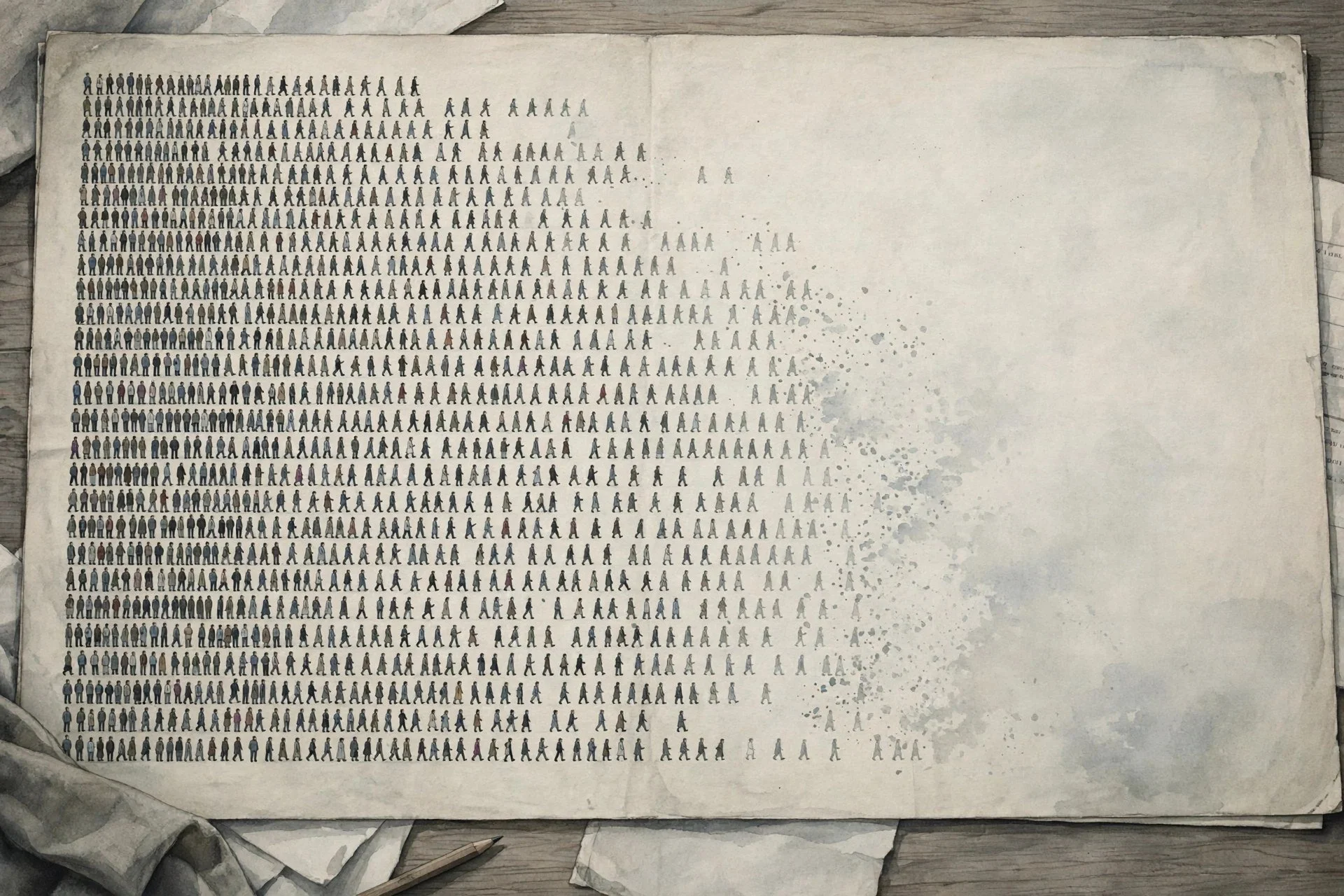
More than one million people in New York and Connecticut could vanish from the official record. No one will move. No one will leave. They will simply be erased from the count that decides how much money communities receive and how many voices they get in Washington.
State leaders in both states have issued that warning in response to sweeping proposed changes to the 2030 United States Census, according to News 12 Hudson Valley. The Trump administration's proposal would reshape who gets tallied and when and where they are counted. The downstream effects would reach directly into Hudson Valley counties and towns.
What the Administration Wants to Change
The Census Bureau published its proposed rule changes in the Federal Register in September. The core change would strip all non-citizens without a green card from the population count used for congressional apportionment. Under the proposal, undocumented immigrants, temporary visa holders, refugees, and asylum seekers would not appear in the figures used to divide House seats and Electoral College votes among the states.
The agency's stated rationale is that undocumented residents are "not true inhabitants" because they lack "a sufficient tie and allegiance to the United States," according to the proposal as reported by News 12 Hudson Valley. President Donald Trump previewed the direction in August 2025, posting on social media that he was ordering "a new and highly accurate CENSUS" and that people "in our Country illegally WILL NOT BE COUNTED IN THE CENSUS."
The proposal would also eliminate questions about race and ethnicity, removing data that state and local governments rely on to allocate resources and comply with anti-discrimination requirements.
The Numbers Behind the Warning
New York has between 825,000 and 920,000 undocumented residents, while Connecticut has between 168,000 and 198,000, according to 2023 estimates from the Center for Migration Studies, the Pew Research Center, and the Migration Policy Institute, as cited by News 12 Hudson Valley. Combined, the two states could lose well over one million people from the official count.
A second proposed change adds to the risk. The Census Bureau wants to anchor residence to where someone lives between January 3 and April 1, 2030. Leaders in both states worry that residents who spend winters elsewhere will not be counted where they actually live.
Connecticut Gov. Ned Lamont put a local face on the concern. "You're in Milford most of the year, and then you go to Mar-a-Lago for a few months, and all of a sudden, you're a Florida resident," Lamont said, according to News 12. How many Hudson Valley residents the new residency window would affect is not known.
What Hangs in the Balance for Hudson Valley
The census is not an abstract exercise. Federal funding formulas for roads, schools, Medicaid, and dozens of other programs tie directly to the official population count. A smaller number on paper means fewer dollars flowing to the counties, towns, and school districts that make up the Hudson Valley.
Representation follows the same math. The figures used to apportion House seats and redraw legislative districts come from census totals. If New York loses people on paper, it loses seats in Congress and in Albany, and it loses weight in the Electoral College. Hudson Valley communities are part of that calculation.
Rep. Rosa DeLauro, the Connecticut Democrat set to chair the House Appropriations Committee in January, was direct about what is at stake. "The census determines how trillions of dollars in federal funds are allocated to our states, to our counties, to our communities," DeLauro said, according to News 12. "This is an effort to rig the system."
Resistance Is Already Forming
New York Attorney General Letitia James has promised to go to court if the changes move forward. "My office fought this same issue in 2019, and won at every level, all the way up to the Supreme Court," James said, according to News 12. "If this administration wants to go for round two, we are prepared to win again."
A public comment period closed November 2. The Trump administration did not respond to News 12's request for comment on the proposal.
Time pressure compounds the stakes. Terri Ann Lowenthal, a nationally recognized census consultant who managed the House census oversight committee for seven years, flagged the urgency. "The census is not four years away," Lowenthal said, according to News 12. "The first census, official census, operation starts next May, less than six months."
DeLauro has also signaled she will use her incoming role atop the appropriations committee, which controls the Census Bureau's budget, as direct leverage to block the rules from taking effect.
If legal challenges, congressional pressure, and public opposition fail to stop the changes, the official count assigned to Hudson Valley communities will determine school funding, Medicaid allocations, and congressional maps for the entire decade that follows. The figure written on paper in 2030 will follow these towns for ten years, whatever the actual number of people living in them.