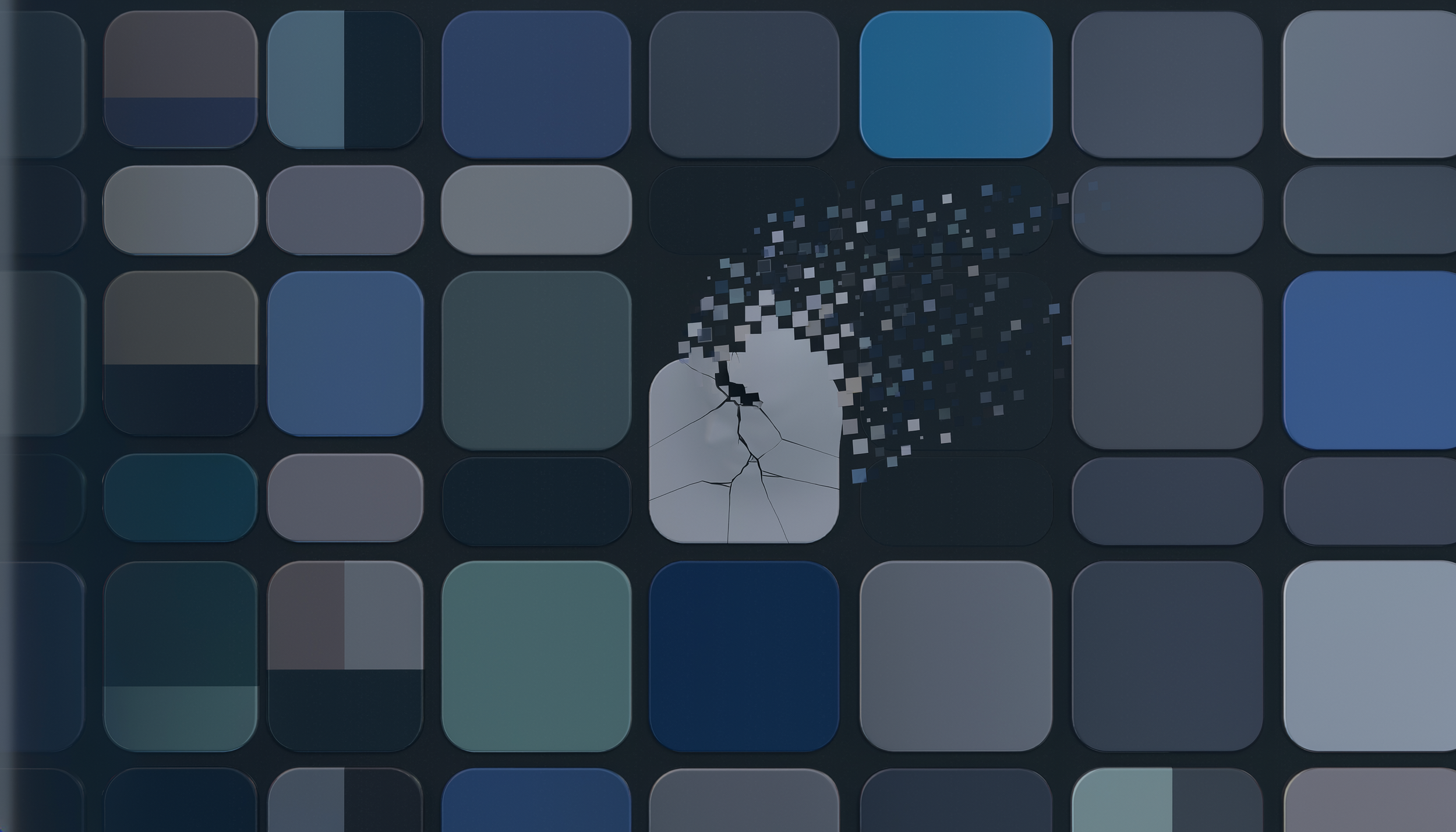
Ordinary apps, one wrong tile. Illustration for RFTUV. Credit: Adobe Firefly via Codex.
By Ellis Ward
The app store listing described a language learning tool. Vocabulary practice, guided drills, the kind of utility that sits on a phone and gets opened twice a week. Underneath that listing, according to a WIRED investigation published November 2, 2026, sat abusive deepfake features that never appeared in any description a user would see.
That app was one node in a network investigators traced across more than 400 connected domains and apps. Some presented as AI workout coaches. Others offered to generate pet portraits. A few appeared entirely ordinary in every visible way. The abusive features stayed hidden.
This is a story about a network built at scale, designed to look like nothing worth examining, and linked by investigators to Chinese-language developers.
What the Investigation Found
WIRED linked the apps through shared infrastructure: more than 400 domains and apps connected in ways not disclosed in any listing and not visible to users during normal use. The ordinary-looking services, language tutors, fitness tools, novelty image generators, were the public face. What WIRED found underneath was different. The investigation described violent AI-generated images and video accessible through tools that presented as something else entirely.
Not every app surfaced the harmful capability immediately. Some appeared to function exactly as advertised. The abusive features could sit dormant, activating under specific conditions or following a later update. That layering made the network difficult to detect. An app that behaves one way during the approval process and a different way afterward can clear review without ever revealing what it actually does.
The investigation identified the network as coordinated, not coincidental. More than 400 apps, connected by shared infrastructure and linked to Chinese-language developers, points to something built deliberately and at scale. This was not a handful of independent actors who happened to adopt similar tactics.
WIRED described the content as violent AI-generated images and video. Some secondary coverage of similar networks has used stronger characterizations. This article uses WIRED's own language and does not extend beyond it.
The Gap Between Approval and What Actually Runs
App stores review software before it goes live. The review process catches a lot. Here, it did not catch this, and the reason is structural.
Software can change behavior after it ships. An app that passes review in one state can later connect to external servers, receive new instructions, or unlock features that were not present, or not visible, during the review window. This is routine in legitimate software. Apps update remotely every day. It is a core part of how modern software works. But it creates a gap: what a reviewer inspects is not necessarily what a user ends up running.
The review process is built around what an app does at the moment of submission. It was not designed to account for software that arrives in one form and later behaves in another. For legitimate developers, that flexibility is a convenience. For bad actors, it is a structural opening.
The WIRED investigation described apps that could switch behavior after approval, or activate under specific conditions. That is a design choice. The ordinary branding reinforces the logic. A pet portrait generator does not attract the same scrutiny as an app that is explicit about what it offers. The cover is not incidental to the operation. It is what makes the operation work.
This gap, between what gets reviewed and what gets run, exists across platforms. Responsible developers work within it without abusing it. This investigation documented the same gap, exploited deliberately, across more than 400 apps.
Who Built It
WIRED linked the network to Chinese-language developers. The investigation did not resolve the full scope of who operated it, or whether a single group controlled all 400-plus apps and domains. The shared infrastructure was the connective tissue. The ordinary branding, varied across individual apps, was what each product showed to users and reviewers.
That combination, shared back-end infrastructure with varied front-end presentation, is effective precisely because review happens at the product level. Each app gets evaluated individually. The network that connects them does not.
Any single app in the network might appear entirely unrelated to any other. Different names, different descriptions, different categories. The connection lived in the infrastructure, not the packaging. Infrastructure is not what most users, or most reviewers, examine.
What Happened When WIRED Started Asking
After WIRED began making inquiries, the network's public footprint contracted. According to the investigation, connections that had linked the apps together appeared to be erased. The infrastructure that had made the network traceable became harder to see.
That response suggests the operators were monitoring for scrutiny and had a process for reducing visibility when it arrived. It does not mean the tools were destroyed or that users who had already downloaded the apps lost access.
The behavior of the network after WIRED's inquiry is worth noting beyond the immediate facts. A network visible enough for investigators to identify and trace across more than 400 apps became, in the space of that inquiry, harder to see. That is not the same as ceasing to exist.
Meta told WIRED it had shared more than 3,000 ads tied to the network and removed about two-thirds of them. That figure leaves roughly a third unaccounted for at the time of reporting.
Specific app names and responses from Apple are not included here. Those details were not available from the primary WIRED source in a form that could be independently confirmed. Without verified platform-level information, it is not possible to say how many apps were removed from which stores, or whether removals were complete.
Removal and unavailability are not the same thing. An app pulled from a storefront can still run on devices that downloaded it before the delisting. A domain that goes dark can return under a different address. The operators' apparent response to WIRED's inquiry shows they understood exactly how they were visible, and acted on that knowledge fast.
Why Ordinary Branding Is the Mechanism
The language tutor framing is not cosmetic. It is functional.
A person looking for a vocabulary app is not assessing deepfake risk. They have no reason to. The ordinary use case is plausible. The description looks right. The category makes sense. The abusive features stay invisible unless a person already knows to look, or unless something has already gone wrong for them.
This is not an argument that every AI app is hiding something. The vast majority are not. But it is an argument for understanding what made this design effective. The ordinary name, the benign category, the useful-looking feature set: each served a purpose beyond attracting users. They got the apps through review. They got them onto phones. The cover was the mechanism. Everything else depended on it.
It also means ordinary users had no reliable way to know. That is not a failure of individual judgment. It is the point of the design.
If You Have Been Targeted
Abusive AI-generated imagery causes direct harm. If you believe you have been targeted, the following steps are consistent with guidance from online safety organizations.
Preserve evidence before reporting. Screenshot any content, links, or messages before you file a report. Platforms often remove flagged material within hours, and evidence can disappear before you have recorded it. If you can, note the app name, the platform, and any links connected to the content.
Report to the platform and the app store. Report to the platform where the content appeared and to the app store where the tool was distributed. Most major platforms have specific pathways for abusive AI-generated content and image-based abuse. Use the dedicated reporting tool where one is available rather than a general abuse report.
Seek support. The Cyber Civil Rights Initiative offers direct assistance to people dealing with non-consensual intimate image abuse and AI-generated image abuse. Victim support organizations in your country or region may also be equipped to help. You do not have to work through this alone.
Get legal or law enforcement guidance. Laws covering AI-generated abusive imagery vary by country and by US state, but many jurisdictions now have specific statutes covering image-based abuse. A local attorney or law enforcement contact familiar with this area can explain what options are available to you.
What We Still Do Not Know
WIRED's investigation identified the network, documented how it was built, and linked it to Chinese-language developers. It does not resolve everything.
How many people encountered these apps before the investigation is not publicly known. How many apps remain live, on any platform, is not publicly known. The operators removed visible connections after WIRED began making inquiries. Whether they rebuilt under different infrastructure is an open question.
The gap this investigation identified is not confined to this network. The same structural opening, software that changes behavior after review, is available to any developer willing to use it. This investigation documented one network that did. Whether others exist has not been answered.
App store review was not designed to catch software that behaves one way during inspection and a different way in use. This investigation put that gap into concrete form across more than 400 apps. What platforms or regulators plan to do about it has not been publicly announced.
The WIRED investigation is a reported finding, not a closed case. The network it found was large. The story is not finished.
Sources
Primary: Hundreds of Mundane AI Apps Are Hiding Abusive Deepfake Features, WIRED, November 2, 2026. All verified facts in this article are drawn from this source unless otherwise noted.
Referenced organization: Cyber Civil Rights Initiative, support and resources for victims of non-consensual intimate image abuse and AI-generated image abuse.