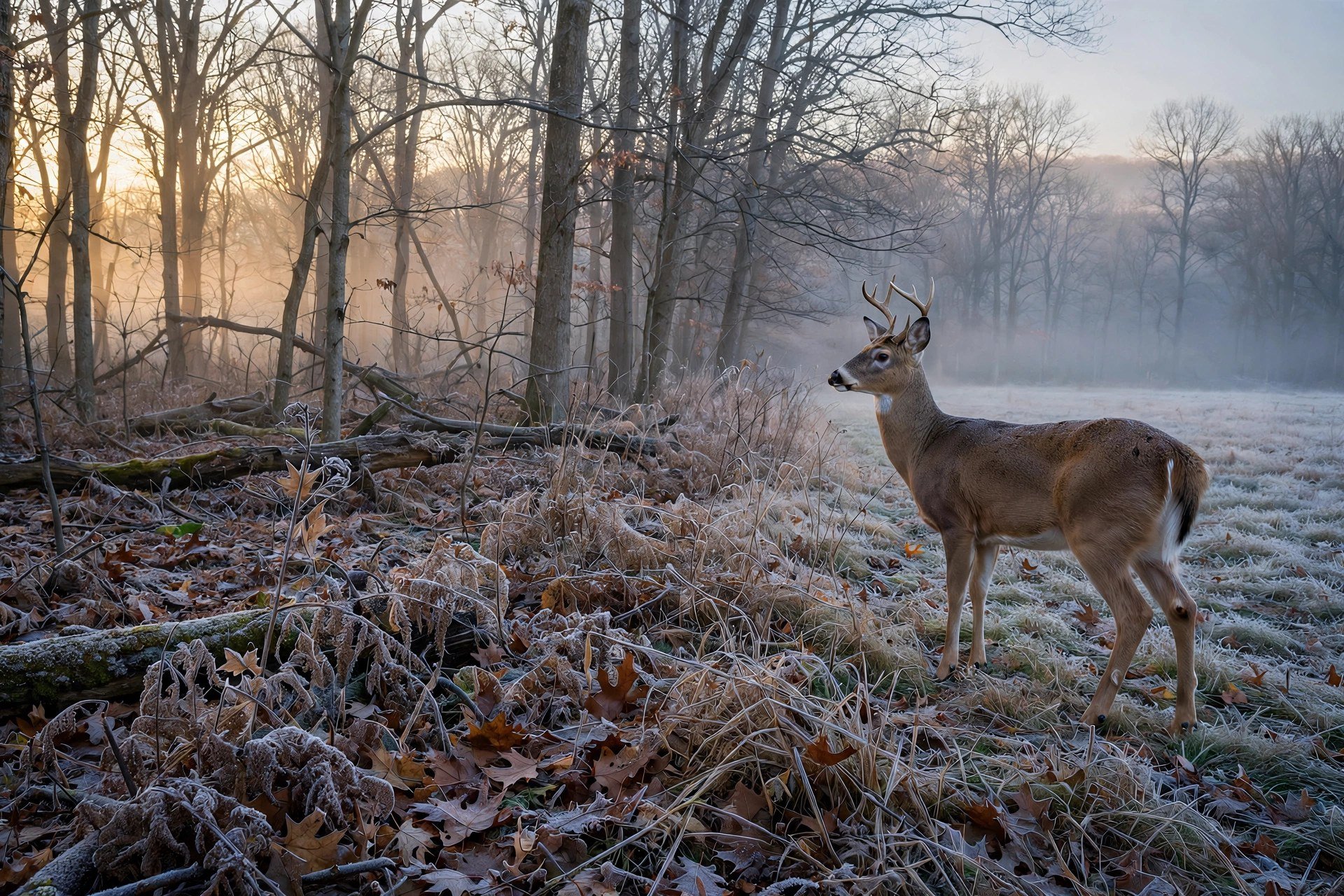
First light in the containment area.
By Ellis Ward | November 24, 2026
New York confirmed its first wild-deer chronic wasting disease case in 21 years last week, and the mandatory testing rules that followed apply in six Livingston County towns only. If you hunt in the Hudson Valley but have no plans to harvest in Conesus, Groveland, North Dansville, Sparta, Springwater, or West Sparta, these rules are not your immediate concern. The Southern Zone regular firearms season runs through December 13, 2026, hunters cover ground across the state, and the rules are worth knowing straight. This guide is for Hudson Valley hunters who hunt in those six towns, hunt statewide, or simply want clarity while the season runs.
What Happened and Why It Matters
An adult female white-tailed deer harvested in the Town of Sparta tested positive for chronic wasting disease in testing at Cornell's veterinary diagnostic lab, where the sample was tested and retested. Further testing is underway at the USDA lab in Ames, Iowa. It is the first confirmed CWD case in a wild New York deer since 2005. DEC has tested more than 70,000 wild deer statewide since 2002.
CWD is an always-fatal prion disease that affects deer, moose, and elk. There is no evidence it infects humans. The CDC recommends against eating venison from a deer known to have CWD.
Commissioner Amanda Lefton put hunters at the center of the response: "Hunters are essential partners in managing New York State's deer populations and protecting the health of our deer herd."
A separate, voluntary surveillance area covers six towns in Herkimer and Otsego counties. Testing there is optional. Only the six Livingston County towns carry mandatory requirements.
Step 1 - Know Whether You Are in the Mandatory Area
If you harvest a deer in any of these six Livingston County towns, mandatory testing applies: Conesus, Groveland, North Dansville, Sparta, Springwater, and West Sparta. If you harvest anywhere else in New York, the mandatory rules below do not apply to you.
Step 2 - Document Where the Deer Was Taken
DEC encourages hunters to use a paper carcass tag or change-of-possession tag confirming the specific town where the deer was harvested. Record the town before you move the animal. That documentation supports the testing process and the carcass-movement rules at the check station.
Step 3 - Do Not Move a Whole Deer Out of the Area
Whole-carcass transport out of the six-town zone is prohibited. The parts you may carry out without a permit: deboned meat, a cleaned skull cap, antlers with no flesh attached, a raw or processed cape or hide, cleaned teeth or the lower jaw, and finished taxidermy mounts. High-risk parts - the brain, spinal cord, spleen, and eyes - may not leave the area under any circumstances.
Step 4 - Choose Your Processing Route
Your next step depends on where you live and how you plan to process the deer.
Using a processor or taxidermist: Get a carcass transport permit from DEC staff at the check station first. That permit allows you to move the whole deer outside the containment area, but only to a designated cooperating processor or taxidermist.
You live inside the area and process it yourself: Bring the whole carcass to the check station. DEC staff will remove the head, and will remove the antlers if you request it. Alternatively, bring just the head with at least three inches of neck attached and deposit it in the head collection bin. Follow the bin instructions for bagging the head and completing the CWD Head Tag.
You live outside the area and process it yourself: DEC strongly recommends bringing the whole carcass to the check station. Staff will help identify a location inside the area where you can debone the meat before you leave.
Step 5 - Cooperating Processors and Taxidermists
DEC has identified cooperating businesses permitted to handle deer from the containment area. They are: Beckers Meat Processing in Wayland; Piggy Pete's, Wester's Deer Processing, and Earner's Deer Processing in Dansville; Robin Coombs in Wayland; Ridge Runner Taxidermy and Finger Lakes Taxidermy in Wayland; and Brian Pragle's in Dansville. Full addresses and phone numbers for each business appear on DEC's CWD webpage. Confirm that information there before you drive.
Step 6 - Go to the Check Station
Through Sunday, November 29: The primary check station is at the Livingston County Center for Emergency Operations, 3360 Gypsy Lane, Mount Morris. Hours are 8 a.m. to 8 p.m. seven days a week through December 13, closed Thanksgiving Day, November 26. A head bin and dumpster at that location are available after hours. A head bin and dumpster are also located at Sparta Town Hall and Highway Department, 8374 Sparta Center Road, Dansville.
Starting Monday, November 30: DEC will open a new check station at the Sparta Highway Department, open 8 a.m. to 8 p.m. through December 13, with a self-service deboning area and dumpster on-site. Bring your own equipment. The Gypsy Lane station closes after Sunday, November 29; a head bin will remain there. The Evening Tribune reported DEC's announcement of this change on November 23. Confirm current check station hours and locations on DEC's CWD page before driving.
Step 7 - Handle the Carcass Safely
Wear rubber gloves during field dressing and processing. Minimize contact with brain and spinal tissue. Do not eat the brain, spinal cord, eyes, spleen, tonsils, intestinal tract, or lymph nodes from any deer taken in the containment area.
To sanitize hard surfaces and metal tools, soak them for one hour in a 50 percent household bleach solution. That concentration inactivates CWD prions. Sanitize between animals. Do not use kitchen knives when processing.
Dispose of carcass parts double-bagged in municipal solid waste or in the DEC dumpster at the check station. Landfill disposal is required. Do not compost, render, or leave carcass parts on the landscape. Field gut piles are the exception to that last rule.
Step 8 - Label the Venison and Wait
Label your venison packages clearly so they can be identified if the deer tests positive. The Democrat and Chronicle advises hunters not to eat the venison until test results arrive. Results can take up to two weeks.
Step 9 - Check Your Result
Track your sample status and results through the portal on DEC's CWD webpage. You will need your document or tag number and an email address. If your sample does not appear in the portal right away, check again in a few days. DEC will contact you directly if CWD is detected in your deer.
Step 10 - If the Test Comes Back Positive
Do not eat the venison. The CDC recommends against consuming meat from a deer known to have CWD. DEC will request the venison for proper disposal and will issue you a replacement tag for the surrendered deer. Deer harvested within the containment area are not eligible for donation.
Other Rules in the Containment Area
You may not keep a roadkill deer taken from within the containment area. Do not collect, sell, possess, or transport deer urine from the area; use synthetic lures instead. Feeding wild deer is illegal in New York. If you observe a sick or abnormal deer - one that appears weak, thin, disoriented, or shows signs of extreme thirst - report it to DEC.
Hunters who harvest deer outside the containment area and want CWD testing can pay for private testing through the Cornell Animal Health Diagnostic Center.
Contact DEC
DEC Region 8 wildlife office: (585) 226-5380. Email: cwd.response@dec.ny.gov. DEC Bureau of Wildlife: (518) 402-8883. For the latest check station locations, hours, the cooperating processors list, and the results portal, visit DEC's CWD webpage.
Sources
- Chronic Wasting Disease - NYS Department of Environmental Conservation
- DEC Announces Chronic Wasting Disease Found in Livingston County Wild Deer - DEC, Nov 6, 2026
- CWD Questions and Answers, updated Nov 19, 2026 - DEC
- New chronic wasting disease check station to open in Dansville Nov 30 - Evening Tribune
- DEC Announces Opening of Regular Firearms Season in the Southern Zone - DEC
- NY deer testing for chronic wasting disease in Livingston County - Democrat and Chronicle