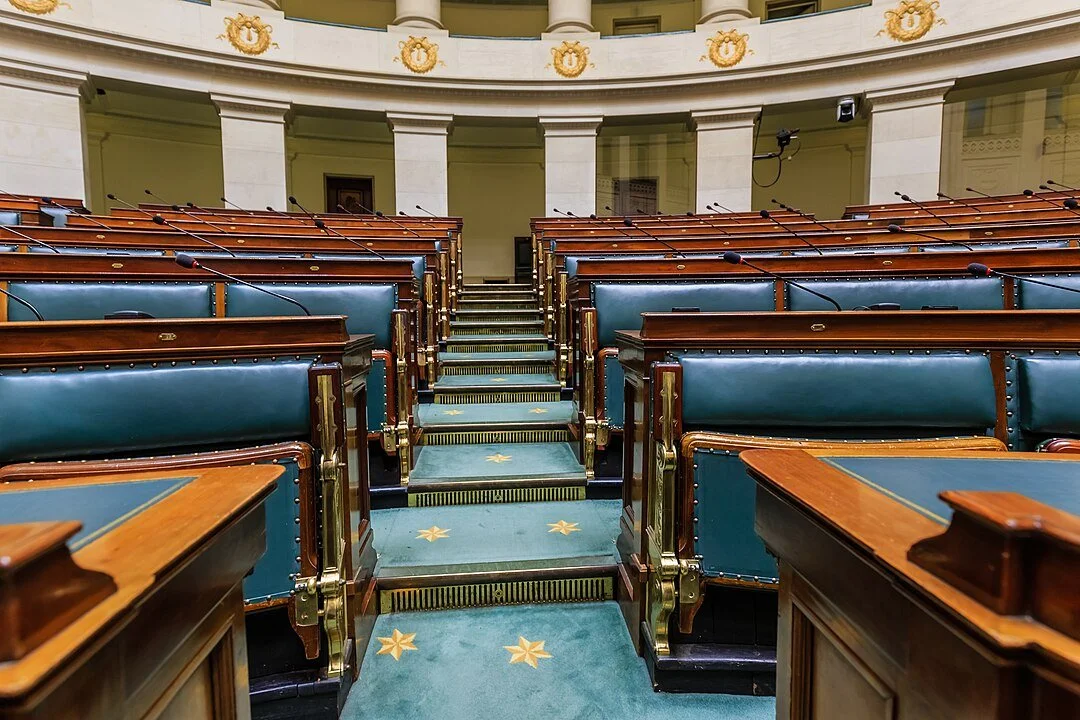
An empty legislative chamber. Stock photo for RFTUV.
By June Mercer | November 5, 2026
Rob Rolison conceded Senate District 39 following Election Day, and Decision Desk HQ called the race for Lisa Kaul on November 5. What comes next matters now.
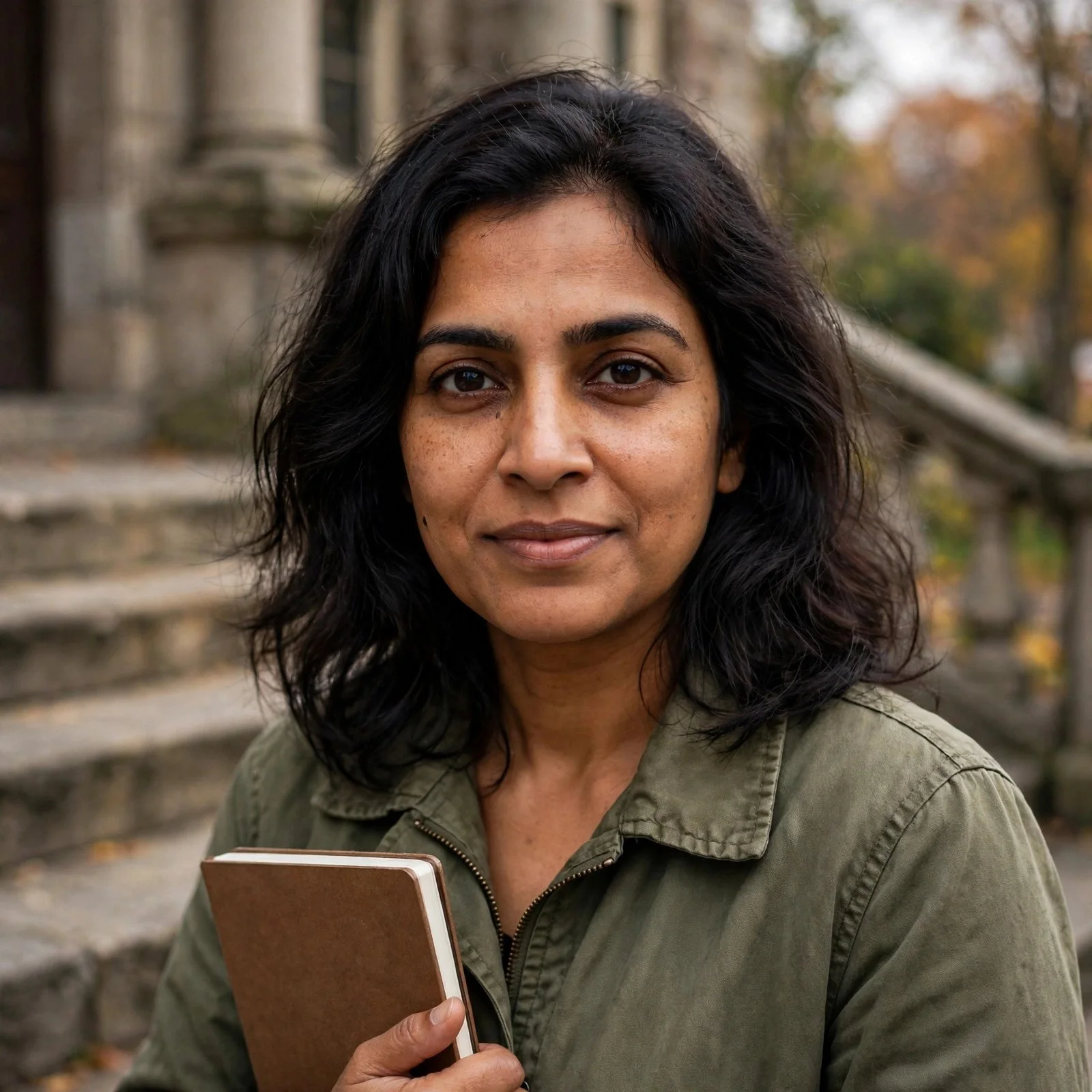
Lisa Kaul, a Dutchess County legislator, Rhodes Scholar, and social and cultural anthropologist who immigrated from India in 2004, is expected to be sworn in January as the district's new state senator. The progressive advocacy group For the Many, which organized volunteers on her behalf, reported she won with 55 percent of the vote, a margin they described as 10 points. Those figures come from an advocacy organization; treat them as such, pending certified district-wide results. The concession is not in dispute.
Rolison had held the seat since 2022, winning with 53 percent that year and 51 percent in 2024, the latter by 2,074 votes out of roughly 158,000 cast, according to the Highlands Current. Each race got closer. City & State NY put the 2024 gap at 1.4 percentage points. District 39 spans portions of Dutchess, Orange, and Putnam counties, taking in the cities of Poughkeepsie and Newburgh as well as communities from Beacon and Philipstown in the north to Wappinger, Fishkill, and Pawling in the south. It was drawn in the 2022 redistricting cycle to be competitive. Two Democratic challengers fell short before Kaul.
What She Campaigned On
Before treating any of these as accomplished fact, the baseline matters: these are stated campaign positions, things Kaul said she would pursue if elected. None are law. Each is cited to the source where she made the claim.
Utilities. Kaul's sharpest campaign issue was Central Hudson. She described the utility to the Poughkeepsie Journal as a "state-sanctioned monopoly" with no incentive to lower rates. Her proposed remedy is the Hudson Valley Power Authority, a state-owned entity that would acquire Central Hudson and run it as a public utility. The core argument, repeated in both the Highlands Current and her City & State NY interview, is that publicly owned utilities borrow through municipal bonds at lower costs and answer to ratepayers rather than shareholders. "Thirty percent of the country gets its utilities from a public authority, and they pay 20 percent less than we do," she told the Highlands Current. She also told the Poughkeepsie Journal she approves of investing in renewable energy as part of any utility transition.
Housing. Kaul stated she would work to protect renters through the Rent Emergency Stabilization for Tenants Act, known as the REST Act, which would let municipalities declare a housing emergency and stabilize rents. She told City & State NY she appreciates that the REST Act includes a pool of money for small landlords, so they can maintain buildings without losing income. She also said she would direct more state money toward the Plus One ADU Program, supporting accessory dwelling units, and back a Social Housing Development Act. She told City & State NY that the district lacks "the middle kind of housing" and that she wants policies that allow housing that is "affordable to build," rather than overwhelming communities with large complexes.
Healthcare. Kaul said she strongly supports the New York Health Act, which would create a single-payer health system for New York. She told City & State NY that roughly half a million New Yorkers are expected to lose healthcare coverage due to federal cuts, and that passing the Health Act would also reduce property taxes by relieving the healthcare cost burden on municipalities and school districts. She said she wants healthcare to be "more accessible" for her constituents by the end of her term.
Transportation. Kaul said she would push to change parameters in State Operating Assistance funding to send more dollars to District 39, with the goal of building public transit that is "reliable, accessible to people and frequent." She told City & State NY that housing and transit are linked issues: more housing without improved transit only adds cars to already-crowded roads.
Climate and energy. She campaigned for cutting administrative hurdles in solar permitting, increasing state investment in upfront costs for solar systems, EVs, and heat pump HVAC, and supporting workforce training so trades workers can transition into clean energy jobs. She chairs the Environment Committee on the Dutchess County Legislature, and pointed to that experience as evidence she can move environmental legislation across party lines.
Her own stated success metric. When the Poughkeepsie Journal asked how voters should measure her if elected, Kaul was specific: by the end of her term, she said she wants residents to see their rent or utility bills go down, their healthcare become more accessible, public transit they can rely on, and sidewalks that are actually fixed.
Those are concrete. Hold onto them.
What This Seat Flip Changes in Albany, and What It Does Not
Going into November, Democrats held 41 of 63 seats in the New York State Senate. Republicans held 22. That is a working majority, but not a supermajority. The Highlands Current reported before Election Day that Democrats had lost the two-thirds threshold in the 2024 election and that flipping one more seat would restore it. Kaul's win alone moves the count from 41 to 42, clearing that bar.
For the Many's post-election statement, written as an advocacy organization, also claimed Democrats picked up four additional state Senate seats on Election Night. If that count holds in certified results, the total gain would be five seats. In the Assembly, Democrats already hold 103 of 150 seats, a supermajority. With both chambers above two-thirds, the legislature could override a gubernatorial veto without any Republican votes.
For this district in particular, something more practical shifts: Dutchess County now has a senator in the majority party for the first time since the seat was created in 2022. Committee assignments, budget requests, and access to conference leadership all favor the majority. A first-term senator in the majority can move things in ways a first-term senator in the minority simply cannot.
Albany's calendar or its appetite for speed does not change overnight.
Kaul takes office in January. The state budget must pass by April 1. First-term senators rarely drive that process. They push for line items, lobby leadership, and show up at hearings. Committee assignments, which will be announced when the new session begins, are not yet known and will shape what she can practically accomplish. Landing on committees for Housing, Health, Energy and Telecommunications, or Environment would put her directly in the path of the bills she campaigned on. Assignments elsewhere slow everything considerably.
The New York Health Act has been before the legislature for years without reaching the floor for a vote. Even Rolison, in his Highlands Current interview, acknowledged the bill had been "in Albany for a good number of years" for a reason. Supporting a bill and moving it are two different things. The Hudson Valley Power Authority would require passing legislation that creates a new state entity with authority to acquire a private, investor-owned utility; that process could involve regulatory proceedings and legal challenges well beyond the first legislative year. These are goals. They are not guaranteed outcomes.
A First-Year Accountability Checklist
Readers across Dutchess, Orange, and Putnam counties can track these items.
Committee assignments (January). Which committees does Kaul receive? Housing, Health, Environment, and Energy and Telecommunications are directly relevant to her stated priorities. She should confirm assignments through her office when announced. The assignments are public once made.
Legislation co-sponsored or introduced (January through April). Does she formally back the REST Act, the Hudson Valley Power Authority Act, the New York Health Act, the Social Housing Development Act, and solar permitting reforms within the first session? Bill sponsorships are public record, searchable on the New York State Senate's website. Tracking her Senate page once she is sworn in shows where she plants her flag and what she is willing to push publicly.
Budget asks (March through April). Does she push for and secure transportation funding through State Operating Assistance changes? Does ADU program funding appear in the state budget? These are line-item fights that happen largely out of public view but have direct effects on how much state money flows to the district for housing and transit. Watch for her public statements around budget negotiations in March.
Utility rate proceedings (ongoing). Central Hudson's rates are regulated by the state Public Service Commission, separate from legislation in Albany. Watch for Kaul's public comments and formal participation in any PSC rate case proceedings. That is an action she can take in year one regardless of what bills pass or stall. It is also a signal of how seriously she pursues utility reform beyond the campaign trail.
Constituent presence across the full district (all year). Kaul's political base is in the Dutchess County portion of District 39. The district also covers parts of Orange and Putnam counties, including Newburgh. Rolison operated a district office on Route 9 in Poughkeepsie. Where Kaul sets up offices, how often she holds constituent hours in Newburgh and in the Putnam County communities, and whether residents outside Dutchess can actually reach her are basic obligations of the seat worth watching from January forward.
End-of-term standard, in her own words. Kaul told the Poughkeepsie Journal she wants voters to see their utility and rent bills go down, healthcare more accessible, reliable transit, and sidewalks repaired. Some of those outcomes involve regulators, federal policy, and local government alongside her own work in Albany. But she chose those words, and they are a fair standard to return to when her term ends.
The most honest summary: the promises Kaul made are ambitious. The seat she won gives her tools, more than her predecessors in this district had. Albany is slow, and a first-term senator, even with a supermajority behind her, must pick battles and earn floor time. The first session will show which of those battles she actually wages.
Sources
- Poughkeepsie Journal / AOL - Rolison vs. Kaul in NY Senate District 39; where they stand on key issues (Oct. 24, 2026)
- Spectrum News / NY State of Politics - Rolison faces Kaul in 39th District state Senate race (Nov. 2, 2026)
- The Highlands Current - Kaul, Rolison Vie for State Senate (Oct. 30, 2026)
- City & State NY - Lisa Kaul looks to oust Rolison from state Senate (Sept. 18, 2026)
- For the Many (advocacy group) - Lisa Kaul flips Senate District 39 (Nov. 4, 2026)
- Times Union - Rolison, Weber losses contribute to Democratic gains in state Senate (Nov. 4, 2026)