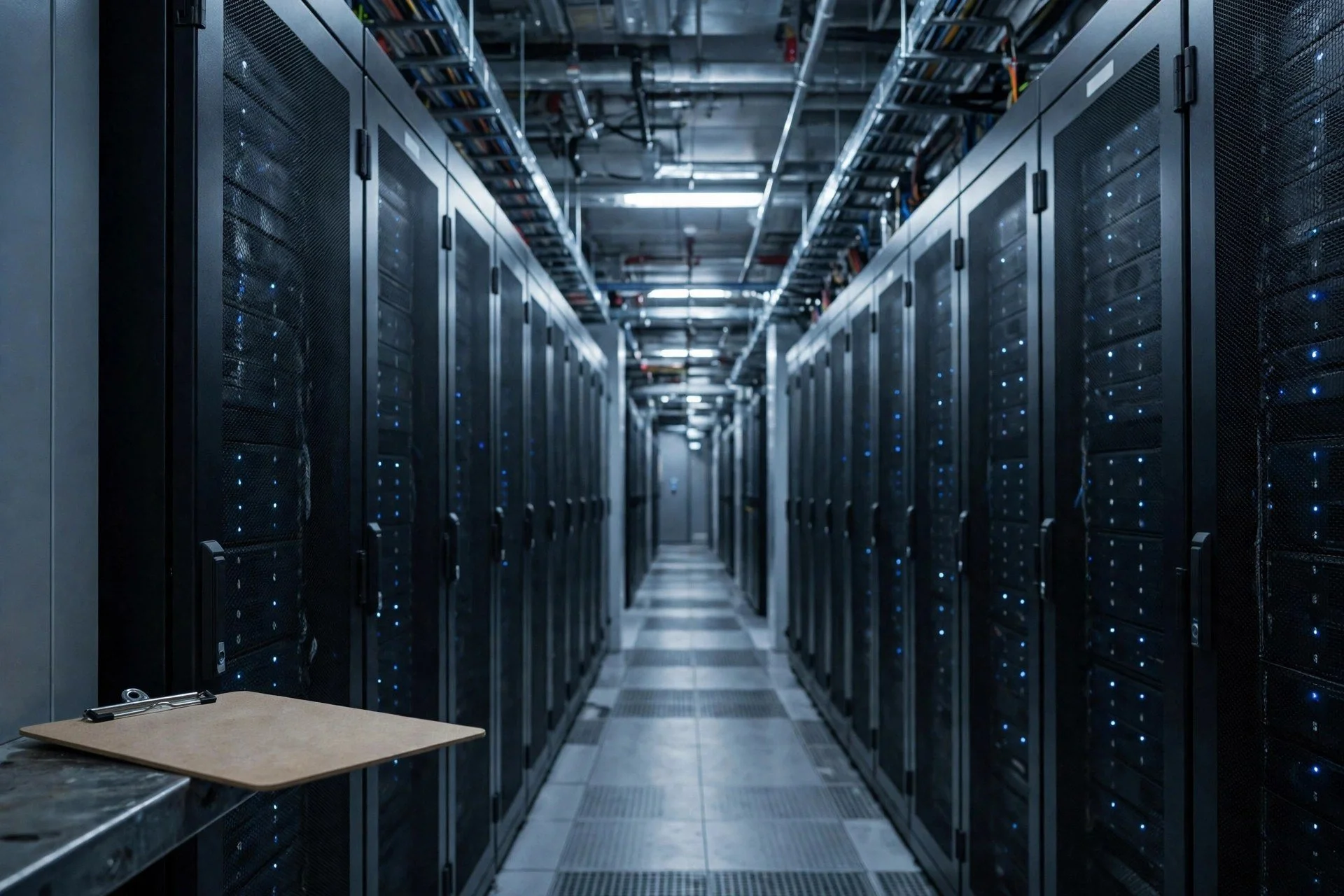
Rows of machines, and a clipboard.
By Mara Quinn | November 12, 2026
Governor Kathy Hochul does not think New York should take AI companies at their word. On November 10, she launched what her office calls the nation's first state-run AI testing program: the New York Center for AI Responsibility and Research, based at SUNY Binghamton. More than 80 New York researchers will independently evaluate advanced AI systems using compute from Empire AI, the state's $500 million public-private initiative.
A Center Built to Check the Work
The New York Center for AI Responsibility and Research is a testing program, not an advisory panel. Its mandate, according to Hochul's office, covers testing advanced AI systems, studying their risks, and generating evidence that public officials can actually use to make decisions. The center will also examine how AI can be deployed responsibly in fields like medicine and scientific discovery, with more than 80 New York scientists applying real compute infrastructure to that work.
The center is housed at SUNY Binghamton. It operates under interim co-directors Greg Morrisett, a computer scientist at Cornell Tech, and Jeannette Wing, a Columbia University professor whose career spans trustworthy computing and formal methods. Their appointment puts two established academic figures, not political staff, in charge of the testing program's early direction.
The state announced the center with a name and an acronym: NYCAIRR. That specificity matters. Institutions with names and acronyms tend to have budgets, staff, and durability. Advisory task forces do not.
Philanthropy, State Investment, and the Compute Behind It
NYCAIRR's origins reach back to January, when the center was first announced alongside a $30 million philanthropic gift. Tom Secunda, a Binghamton alumnus and co-founder of Bloomberg LP, led that gift. The state added an initial $25 million SUNY research investment and state operating capital to fund the program's operations.
The funding structure distinguishes NYCAIRR from most state-level AI governance efforts, which tend to produce reports from advisory councils rather than research from working scientists. This program carries named faculty leadership, committed funding from both public and private sources, and a compute platform already in place.
Empire AI provides that platform. Hochul's $500 million public-private AI initiative gives NYCAIRR's researchers the infrastructure to run tests at scale. Without dedicated compute, independent AI evaluation stays theoretical. Empire AI makes it operational.
The RAISE Act and the DIGIT Office
The November 10 launch covered more than NYCAIRR. It also opened a registration portal for large frontier AI developers, tied to the state's RAISE Act, which Hochul signed last year. Those developers must register with New York by January 1, 2027. After that date, they must publish safety frameworks, release transparency reports, and report critical safety incidents within 72 hours.
The same launch established the DIGIT office, the first state office in the nation created specifically to implement the RAISE Act. DIGIT handles the administrative side of the law. NYCAIRR handles the research side. Together, they form New York's two-pronged structure: require disclosure, then independently study what gets disclosed.
RFTUV covered the RAISE Act registration requirement on November 11. The November 10 events are the operational architecture behind that mandate. The registration portal, state office, and research center all opened on the same day.
The Disclosure Problem Engadget Named
The program carries a structural limit. As Engadget reported, NYCAIRR can only study what AI companies disclose publicly. That is not a minor footnote. AI systems with the greatest potential for harm, including unreleased models, internal deployments, and pre-launch research, sit entirely outside the center's reach unless companies choose to surface them.
The RAISE Act narrows the gap. Mandatory transparency reports and the 72-hour incident reporting requirement will produce more public information than currently exists. Legal deadlines create pressure that voluntary disclosure does not. But the law, like NYCAIRR itself, still depends on what developers put on record. Models that do not meet New York's disclosure threshold remain invisible to the researchers at Binghamton.
New York cannot compel companies to open their training pipelines or submit proprietary evaluation data. It can only examine what the law requires companies to show, and what NYCAIRR's researchers can reach through Empire AI. That boundary is built into the program's architecture.
January 1 and What Follows
Large frontier AI developers have until January 1, 2027 to register through the portal that opened November 10. After that deadline, the RAISE Act's transparency requirements activate. NYCAIRR, with 80-plus researchers and Empire AI compute behind it, will have a body of disclosed material to actually test against.
How much that amounts to depends on what the registration process produces, and on how companies interpret their obligations under the law. New York has built the institution. What the institution gets to see is still an open question.