By June Mercer | October 30, 2026
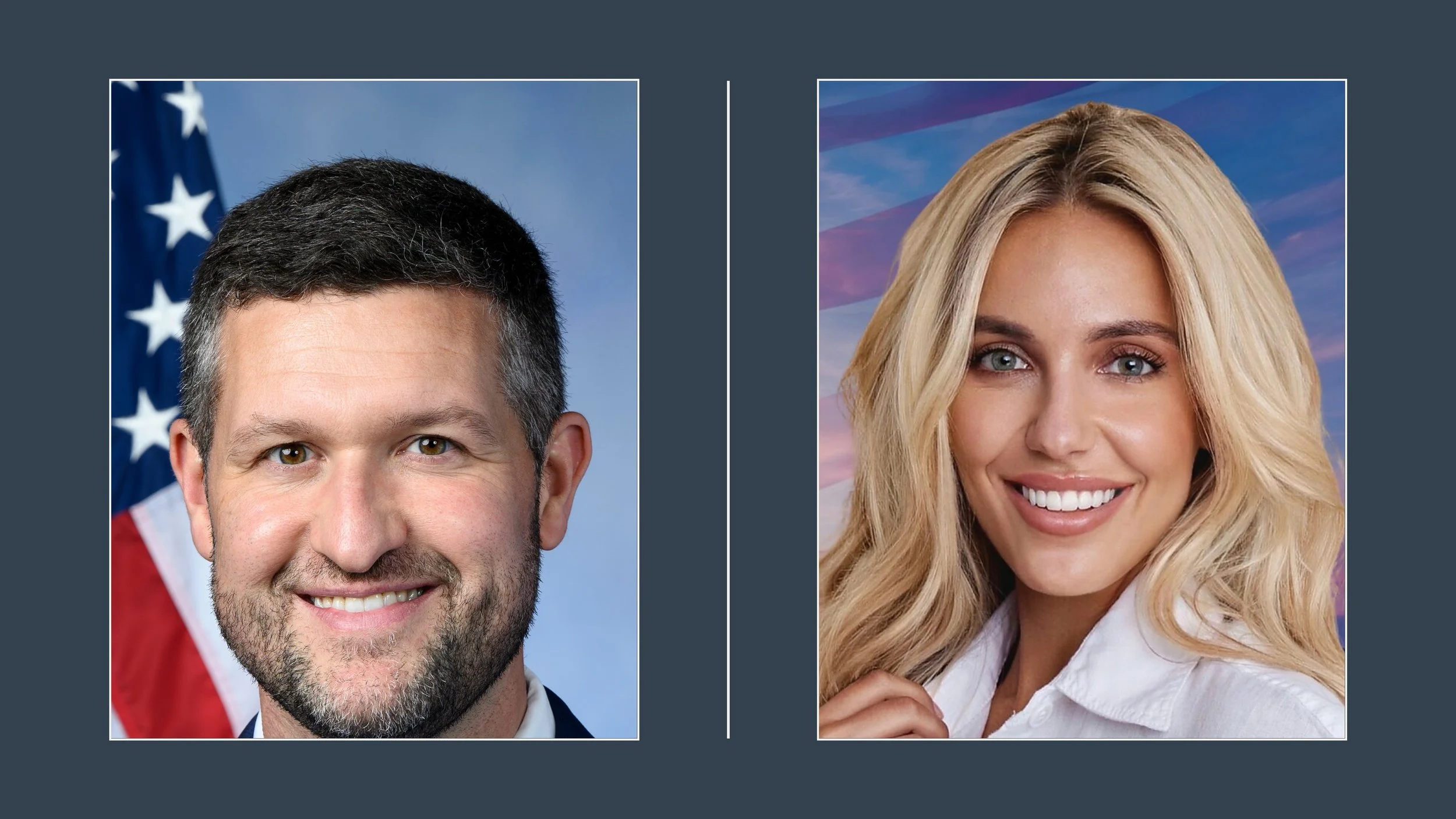
Rep. Pat Ryan and Republican challenger Jackie Mary Auringer shared a stage Wednesday morning at the Dutchess County Regional Chamber of Commerce Contact Breakfast, less than a week before Election Day, with the Poughkeepsie Journal reporting on the Oct. 28 exchange moderated by Chamber President and CEO Frank Castella. Topics ranged from tax policy and congressional stock trading to health care, the federal minimum wage and artificial intelligence. Castella opened by thanking both candidates for attending and for what he called "their willingness to lead."
The two are competing for a seat that covers all of Orange County and most of Dutchess and Ulster counties, taking in the cities of Kingston, Poughkeepsie, Beacon, Newburgh and Middletown. Ryan told WAMC radio in an Oct. 28 interview that he represents "800,000 people in a very politically diverse district." The Poughkeepsie Journal, citing Census Reporter, puts the constituency at nearly 800,000.
According to the Journal's account, Ryan framed the morning in broad terms from the start. "I think we're at a moral moment in the country," he said, adding that whatever the policy disagreements, conduct should befit the generations who built the 250-year American experiment. Auringer called for moving past right-versus-left divisions toward an emphasis on the environment and on taxpayers' interests, and closed her introduction with a blunt declaration: "I'm tired of footing the bill for others."
Per their Contact Breakfast bios as reported by the Journal, Ryan is a fifth-generation Hudson Valley native, the first West Point graduate to represent the Academy in the U.S. House, a veteran of two tours in Iraq, and a former Ulster County executive before his 2022 election to Congress. Auringer was born and raised in Kingston, holds a degree from Florida Gulf Coast University's Lutgert College of Business, works for her family's crane and construction company, and is seeking her first political position.
Taxing the wealthy
Ryan said he believes taxes should be increased on the wealthiest Americans, but emphasized that "the threshold matters," according to the Poughkeepsie Journal's account of the breakfast. He said tax policy as currently structured tends to penalize people sitting at the line between the middle class and the upper class. His shorthand for the goal: he wants "less trillionaires and more millionaires in America."
Auringer did not share that view. She said it is not right to tax the rich or impose more taxes, and cast the underlying problem as one of government spending rather than revenue. Her argument, as the Journal reported it, focused on understanding where federal and state funding is actually allocated before any new tax policy is considered.
The exchange set a pattern that held across most of the morning's topics: Ryan proposing government action to correct an economic imbalance, Auringer arguing that spending discipline and accountability come first.
A ban on congressional stock trading
On one issue, the candidates found clear common ground: neither believes members of Congress should be trading stocks.
The Journal reported that both Ryan and Auringer support a full ban. Auringer was direct. "I don't think you should be able to trade stock and get rich in office while, you know, the rest of us are footing the bill sitting here at home," she said, according to the Journal. She called for more transparency in government and said she supports the "Stop Insider Trading Act," which the Journal, citing congress.gov, describes as legislation that would prevent members of Congress, their spouses and dependent children from purchasing new stock and that would require public notice before members sell stocks.
Ryan extended the prohibition beyond Congress. He said members of Congress, the president and senior-level appointed officials should all be barred from trading, and noted, according to the Journal, that leaders across party lines have repeatedly blocked the issue from coming to a vote. People who enter Congress to make money are in it "for the wrong reasons," he said. He connected the issue to a broader call for structural reform and pointed to term limits as part of the solution.
Health care
Health care produced some of the most specific policy contrasts of the morning, with the candidates arriving from opposite directions on federal spending and the reach of existing programs.
Ryan highlighted legislation he helped introduce earlier this month. On Oct. 23, according to House press releases from Reps. Deluzio, Jayapal, Dingell and Ryan, the four members put forward the Improving Medicare Coverage Act, which would lower the Medicare eligibility age from 65 to 50 and would create a Medicare Cost Assistance Program covering specified Part A and Part B premiums, deductibles and coinsurance for individuals up to 200 percent of the federal poverty level. Ryan's House website lists an Oct. 23 item on the bill. (Becker's Payer Issues placed the introduction date at Oct. 22; House press releases and Ryan's House site give Oct. 23.)
Ryan also called for extending Affordable Care Act Premium Tax Credits, which he said Congress last year could not get a "proper vote on." The Journal noted, citing the IRS, that the premium tax credit is a refundable credit helping eligible families and individuals cover premiums for coverage purchased through the Health Insurance Marketplace.
Ryan additionally called for rolling back what he referred to as the "Big Beautiful Bill," describing that label as a misnomer. He cited, as the Journal reported it, the bill's Medicaid cuts and their effects on children, seniors and people with disabilities, and argued those provisions exist to deliver tax relief for the top one percent of earners. The Journal presents these as Ryan's characterizations.
Auringer took the opposite position on the same legislation. She named what she called its benefits: no tax on tips, no tax on overtime, and tax relief for seniors. She said the bill roots out "waste, fraud and abuse," a phrase the Journal noted she returned to multiple times over the course of the morning. She called for more transparency and accountability in how health care tax dollars are spent and said she wants to "expand healthcare access," though she did not specify a mechanism.
The federal minimum wage
The federal minimum wage stands at $7.25 per hour, per the U.S. Department of Labor. New York's minimum wage for workers outside New York City, Long Island and Westchester will rise to $16 per hour on Jan. 1, 2027, according to the New York State Department of Labor. The gap creates a competitive disadvantage for New York businesses bidding against employers in lower-wage states, and that tension framed the question the forum put to both candidates: whether they support raising the federal floor to narrow it.
Auringer said she would have to "crunch the numbers" to understand the impact before committing to a position. She said she needs to determine whether the money is there and what the broader effects would be, and she returned to finding "waste, fraud and abuse" in federal and state spending as a precondition for wage decisions.
Ryan's position was less hedged. He said raising the $7.25 floor is not only "morally right" but would help mid-Hudson Valley small businesses compete against employers in states that pay their workers less. His framing positioned a higher federal minimum as a leveling mechanism for local employers, not a burden on them.
AI and data centers
The question of artificial intelligence and data centers gave both candidates a chance to stake out local positions, and Ryan moved quickly to name a specific example, according to the Journal's report.
Ryan pointed immediately to East Fishkill and credited Town Supervisor Nicholas D'Alessandro with the town's work to impose a moratorium. The Journal's own Oct. 7 report corroborates that East Fishkill passed a three-year moratorium on data centers on June 25, in effect until July 1, 2029. Ryan said he is against data centers that would drive up utility costs or negatively affect the water supply, and described himself as extremely wary of artificial intelligence and its potential effects on humankind. He said constituents tell him they do not trust AI companies to act in their interests. He would consider data centers locally, he said, if clear community benefits existed and "common sense safety guidelines" were established, and he expressed hope that the broader AI race would slow down and develop responsibly.
Auringer said she "firmly" believes no member of Congress who built a career in artificial intelligence or surveillance and holds stock in those industries should hold office. She said she is not the biggest fan of AI or data centers, and argued that AI should function as a tool only, "an instrument to help enhance our life, our experience," rather than a replacement for human critical thinking. She said she would do whatever she can to prevent data centers from expanding into the mid-Hudson Valley, and offered regional trade development and STEM job opportunities as an alternative economic path for the area.
The district, the clock, and what comes next
Wednesday's breakfast was not the first time the two have appeared on the same stage in October. The Orange County Chamber of Commerce hosted a candidates forum on Oct. 22 at Mount Saint Mary College in Newburgh. The week before that, Auringer abruptly dropped out of an online debate organized by the Daily Freeman; Freeman moderators and Ryan continued the session without her, according to HVNY reporting.
The seat covers NY-18, which takes in all of Orange County and most of Dutchess and Ulster counties. The cities of Newburgh, Middletown, Kingston and Poughkeepsie all fall within the district. The Journal, citing Census Reporter, puts the constituency at nearly 800,000 people. Ryan is running on the Democratic and Working Families lines; Auringer is on the Republican and Conservative lines, according to the Journal and the Newburgh Times ballot guide.
Ryan's closing weekend includes a "Get Out the Vote Hudson Valley Rally" on Sunday, Nov. 1, at the Bardavon 1869 Opera House on Market Street in Poughkeepsie. Doors open at 5 p.m. and the program runs from 6 to 8 p.m., per an Oct. 29 Hudson Valley Country report. Rep. Alexandria Ocasio-Cortez is scheduled to join Ryan at the event, along with State Sen. Michelle Hinchey, Assemblymember Sarahana Shrestha and Dutchess County Legislator Lisa Kaul.
Voters who have not yet cast a ballot can vote in person through Sunday, Nov. 1. There is no early voting on Monday, Nov. 2. Election Day is Tuesday, Nov. 3; New York polls are open from 6 a.m. to 9 p.m. Mail ballots must be postmarked by Nov. 3 and received by Nov. 10, according to reporting from lohud.com.
Sources
- Poughkeepsie Journal: "Pat Ryan, Jackie Auringer face off on taxes, wages, AI" (Oct. 29, 2026)
- Jayapal House press release: Improving Medicare Coverage Act (Oct. 23, 2026)
- Deluzio House press release: Improving Medicare Coverage Act (Oct. 23, 2026)
- Rep. Pat Ryan House website
- Becker's Payer Issues: Bill would lower Medicare eligibility age to 50
- Poughkeepsie Journal: East Fishkill data center moratorium (Oct. 7, 2026)
- WAMC: Election 2026 NY-18, Pat Ryan interview (Oct. 28, 2026)
- Newburgh Times: 2026 ballot guide
- Lohud: New York 2026 early voting and deadlines
- Epicenter NYC: NYC Voter Guide 2026
- HVNY: Newburgh forum scheduled after Auringer drops out of Freeman debate
- Hudson Valley Country: AOC Poughkeepsie rally (Oct. 29, 2026)