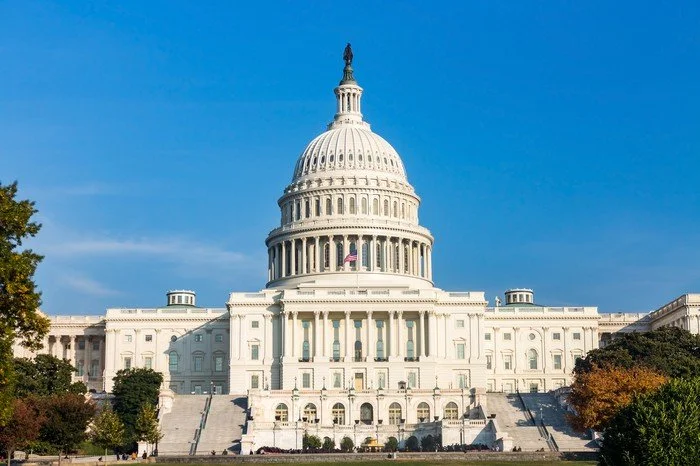
Ryan heads back to Congress with his agenda on the table.
By June Mercer | November 8, 2026
Pat Ryan held his seat in New York's 18th Congressional District on Tuesday, defeating Republican challenger Jackie Auringer in a race that sent the two-term incumbent back to Washington with a clear mandate on affordability. With 99 percent of voters accounted for as of November 5, the Associated Press showed Ryan with 169,001 votes and 88.81 percent of precincts reporting. He returns to Congress in January 2027 with a set of legislative priorities he has been building toward for two terms, and for the first time, a House majority ready to move them.
The Election Result
Ryan's margin over Auringer was wide from early returns. Auringer, 29, is a Kingston native who had never held elected office before this race. As of September 30, she had raised $153,000 to Ryan's $5.3 million, a gap that Vassar College professor Richard Born analyzed for the Highlands Current in the weeks before election day. The fundraising disparity captured the structural challenge she faced: a first-time candidate running against an incumbent who had built a donor network across the district and in Washington over four years of political organizing.
Ryan first entered Congress through an August 2022 special election, a race he won by 3,837 votes out of 132,246 cast. He has represented the 18th District since January 2023. The district covers Orange County and parts of Dutchess and Ulster counties, including the city of Beacon. Ryan is a fifth-generation Hudson Valley native, born and raised in Kingston. He graduated from West Point and served two tours in Iraq as an Army officer before entering politics. That background has given him a base of credibility with veterans and working families in a district spanning rural towns, small cities, and commuter suburbs.
Affordability as the First Priority
Ryan named affordability his stated first priority heading into the new term. The word covers a specific list of concerns he has addressed directly: housing costs, healthcare expenses, grocery prices, utility bills, gas, and home heating oil. Each item on that list represents a pressure his constituents have raised repeatedly in public forums and town halls across Orange, Dutchess, and Ulster counties.
He plans to reintroduce two bills in the incoming Congress. The first is the Lower Grocery Prices Act, aimed at reducing food costs for families who have watched grocery bills climb since the pandemic. The second is the Lowering Utility Bills Act, which addresses household energy costs for residents throughout the district. Both bills stalled in the Republican-controlled House during Ryan's first two terms. He returns now with a House Democratic majority of 242 to 152, as the Poughkeepsie Journal reported as of November 5. That majority represents the first real chance either bill has had to advance through the lower chamber.
Legislative Record So Far
Before this election, Ryan's record included two notable legislative accomplishments. He co-supported the 21st Century ROAD to Housing Act, a bipartisan measure that became law in July. The act targets affordable housing supply, addressing one piece of the cost burden his constituents describe. Its bipartisan path through a divided Congress was uncommon, and its passage gave Ryan a concrete housing law to point to.
Ryan also secured passage of the Hudson River Protection Act, signed into law in December 2025. That act prohibits new barge anchorages along the Hudson River. The law addressed long-standing concerns from communities along the Hudson about river traffic and the environmental impact of expanded anchorage activity. Both laws exemplify Ryan moving legislation through a hostile House, though his broader affordability agenda made far less progress under Republican leadership.
The October Chamber Forum
On October 28, Ryan appeared at the Dutchess County Regional Chamber of Commerce Contact Breakfast, one of the region's established forums for business leaders and elected officials to meet face to face. Frank Castella, the chamber's president and CEO, moderated the event. Ryan used the forum to lay out a set of specific positions that previewed the agenda he now takes back to Washington with a renewed majority at his back.
On taxes, Ryan backed raising taxes on the wealthiest Americans. He said Congress should ban members from engaging in insider trading, a position with notable public support but a poor legislative track record. The practice of lawmakers trading individual stocks while serving on committees with oversight of those same industries has drawn criticism from both parties, but legislation to ban it has stalled repeatedly in recent years.
On healthcare, Ryan backed extending the Affordable Care Act's premium tax credits. Those credits have helped lower- and middle-income households afford coverage since the ACA passed. Without an extension, they are set to expire, which would raise premiums for millions of people who rely on ACA marketplace plans. Ryan made clear he sees an extension as a baseline obligation, not a secondary concern.
Ryan went further on Medicare. He backed lowering the Medicare eligibility age from 65 to 50 under the Improving Medicare Coverage Act, a bill he helped introduce on October 23, just five days before the chamber forum. That proposal would bring Medicare coverage to tens of millions of Americans who currently fall into the gap between private or employer insurance and Medicare eligibility. The bill's introduction so close to the election was a deliberate signal of where Ryan intends to direct energy in the new Congress.
On energy infrastructure, Ryan staked out a position on data centers. He opposed data centers that would increase utility costs and negatively affect the water supply. Data centers require significant electrical power and large volumes of water to manage heat loads. Their proliferation has raised questions in communities weighing potential economic development against direct costs to existing residents. Ryan's opposition at the forum tied directly to his broader concern about utility bills, linking infrastructure decisions to household expenses and framing development choices through the lens of cost to constituents.
A New Majority as a Test
Much of Ryan's cost-cutting legislative agenda stalled in the Republican-controlled House during his first two terms, as the Highlands Current reported. The new Democratic majority of 242 to 152 changes the arithmetic. Democrats now hold enough seats to bring bills to the floor and pass them through the House without Republican votes.
That is a significant shift. Bills like the Lower Grocery Prices Act and the Lowering Utility Bills Act had no path in the previous House. Neither did the Improving Medicare Coverage Act he introduced weeks before the election. The new House majority does not guarantee passage through the Senate or signature into law, but it closes the first gap that has blocked Ryan's agenda.
The new Congress convenes in January 2027. That date gives the district a fixed reference point. By the end of 2027, voters will be able to measure whether the majority Ryan returns with translated into substantive progress on the bills he has named as his first priorities. The gap between what he has proposed and what has passed defined his first two terms. The new majority removes the structural obstacle that divided government provided. What moves forward now will reflect choices, priorities, and the ability to hold a coalition together, not simply the opposition of the other party.
Background: Five Generations in the Valley
Ryan, 44, grew up in Kingston and carries a family history in the Hudson Valley that stretches back five generations. He attended West Point, the Army's officer training academy on the Hudson River just south of his district, and graduated before serving two tours in Iraq as an Army officer. His military career shaped his public presentation: he speaks in concrete terms, favors direct answers, and leans on his record of service when challengers question his positions or his commitment to the district.
His path to Congress began with that August 2022 special election, a competitive race in a redrawn district. He won by 3,837 votes of 132,246 cast. The margin was narrow enough that a different outcome would not have surprised anyone watching the race. It was wide enough to send him to Washington with a mandate, and he has held the seat since January 2023.
Auringer's challenge this cycle came from a different kind of starting point. At 29, also a Kingston native, she ran her first campaign for any elected office in 2026. She had raised $153,000 as of September 30, against Ryan's $5.3 million in the same period. Vassar professor Richard Born's analysis in the Highlands Current pointed to that gap as the defining structural challenge of the race. Auringer faced the bar most first-time challengers to sitting incumbents face: enough structural disadvantage that even a disciplined campaign would need an unusually favorable environment to close it.
What Comes Next
Ryan returns to Washington representing a district that runs from Orange County through parts of Dutchess and Ulster, including Beacon. His agenda is specific: housing, groceries, utilities, healthcare, gas, and home heating oil. The legislative vehicles are in place or ready to be reintroduced. The majority needed to advance them in the House now exists for the first time since he took office.
January 2027 is when the new Congress convenes and when Ryan's first real window opens. The Lower Grocery Prices Act and the Lowering Utility Bills Act are ready to reintroduce. The Improving Medicare Coverage Act is already filed. The ACA premium tax credit extension has a ticking deadline imposed by existing law. The 21st Century ROAD to Housing Act is already on the books, a foundation for further housing legislation. The Hudson River Protection Act stands as a completed commitment to the valley's waterway and the communities along it.
The district will watch whether the new majority delivers what the previous one prevented. That question now has a concrete set of bills attached to it, and a concrete date by which progress can be measured.