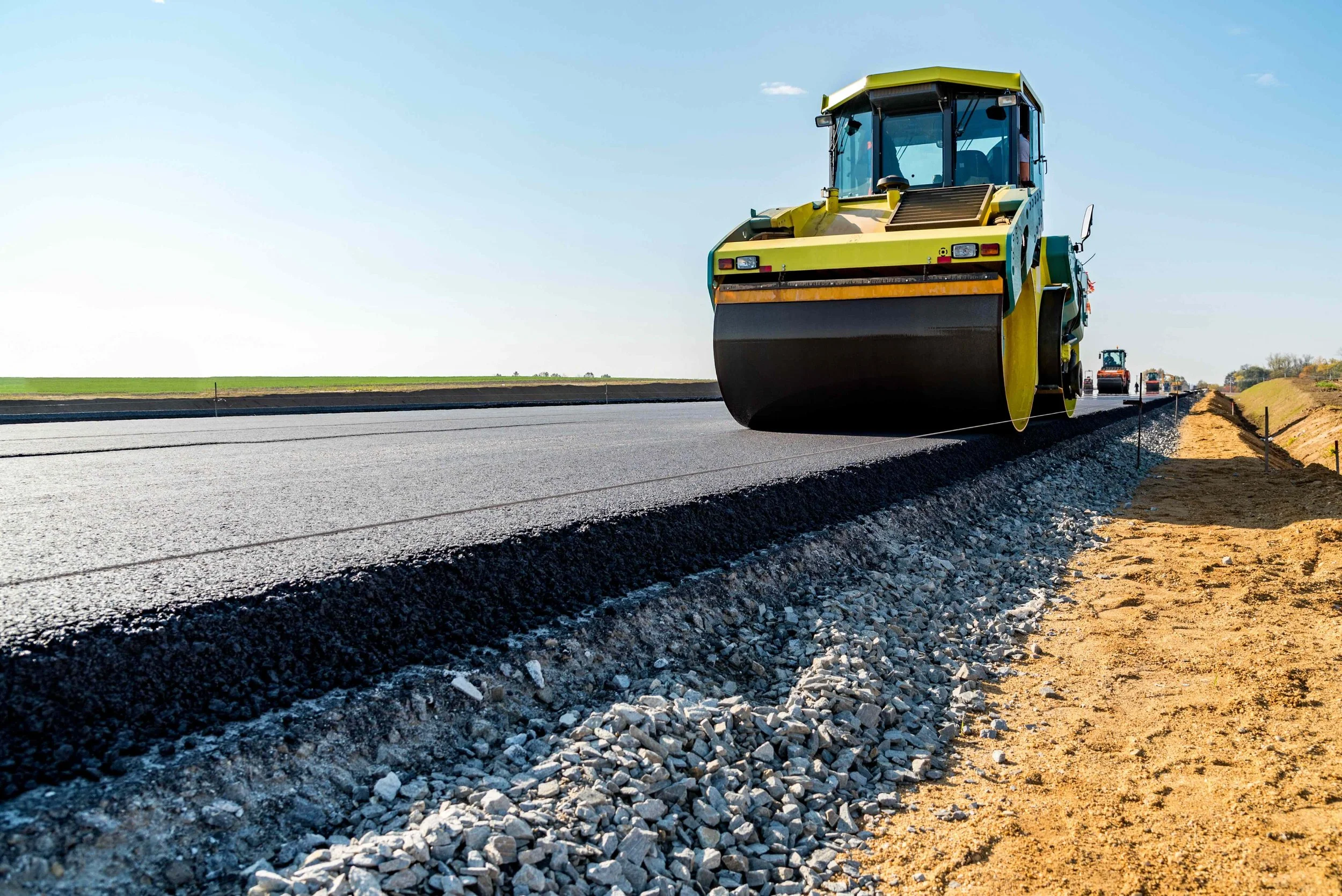
Fresh pavement, old question.
By June Mercer | November 9, 2026
New York State tested rubber-modified asphalt in 1989 and found it did not work. The state declared the technology "not economical nor successful" and moved on. The record does not show that the test used a specific method, the dry process, built on a Swedish-derived formulation called PlusRide. The favorable performance data that circulates in engineering literature today comes from a different method entirely.
That 35-year gap, between a verdict on one process and an open question about another, may help explain why Hudson Valley roads still run through the same repaving cycles that residents have watched repeat for decades.
What Rubber-Modified Asphalt Is and Why It Matters
Rubber-modified asphalt concrete, known as RAC, blends ground-up recycled tires into the asphalt binder or mix to change how the finished road performs. The material comes in two main forms, and those forms matter more than the shared ingredient.
The dry process substitutes crumb rubber for a portion of the fine aggregate in the asphalt mix. The rubber acts as filler. The United States adopted this method from Sweden in the late 1960s, and the main commercial version carried the trade name PlusRide.
The wet process blends crumb rubber directly into the liquid asphalt binder before the mix is assembled. The rubber interacts chemically with the binder, altering how it responds to temperature changes, traffic load, and long-term stress. Asphalt-rubber, the main wet-process product, typically uses 18 to 22 percent crumb rubber by weight of the binder. A third variant, the terminal blend, processes the rubber into the binder at a refinery or terminal before it reaches the construction site. Terminal blend has been in use in California for more than 20 years.
The performance data attached to RAC as a category refers almost entirely to wet-process work. According to CalRecycle data cited by the U.S. Tire Manufacturers Association, RAC built to proper specifications lasts much longer than conventional pavement, often 50 percent longer. It resists cracking. It holds color longer than standard black asphalt. It improves skid resistance. It runs quieter under traffic.
The Los Angeles County Department of Public Works reports typical rubberized asphalt lifespans of 14 to 18 years on county roads, with some sections clearing 15 years without resurfacing. Standard asphalt under comparable conditions often needs attention within 7 to 10 years.
The cost case follows the lifespan. RAC overlays can be applied at reduced thickness, sometimes half the depth of a conventional overlay, while still meeting performance targets. Reduced material per lane mile combined with longer maintenance cycles can produce meaningful lifecycle savings. A road that lasts 15 years instead of 8 is resurfaced fewer times per decade, and each resurfacing uses less material per pass. Neither saving is dramatic in isolation. Over a county-wide road program, they compound.
New York's 1989 Test: What Was Done and What Was Found
In 1987, New York State lawmakers directed the Department of Transportation to run a pilot program on rubber-modified asphalt. The mandate fit a growing national conversation. Federal interest in crumb-rubber paving was rising, and in December 1991 Congress would pass the Intermodal Surface Transportation Efficiency Act, which included a provision requiring states to incorporate crumb rubber into federally funded asphalt projects, starting at 5 percent in 1994 and rising to 20 percent by 1997. That mandate ultimately faced sustained resistance from state transportation agencies and was removed in the National Highway System Designation Act of 1995. But in 1987, New York's legislature was moving in step with that national current.
Construction ran in the summer of 1989. Workers paved two experimental roads. Each road carried five 2,000-foot test sections. The variables were rubber content by weight: sections with 1 percent, 2 percent, and 3 percent rubber in the mix, plus a section using a branded additive product, and a standard asphalt control section. The overlay was 1.5 inches thick and went down over concrete base.
Every rubber section used the dry process. The PlusRide formulation substituted ground crumb rubber for fine aggregate. No wet-process sections were included. No terminal-blend sections were included. The test was, from start to finish, an evaluation of one specific dry-process method.
After three years of monitoring, NYSDOT released its findings, later cited in a Federal Highway Administration guide. The rubber pavements were performing "not as well as the regular mixes." The department judged the results "not economical nor successful."
That conclusion entered the state record. It has not been formally revisited.
Why the 1989 Test Does Not Settle the Wet-Process Question
NYSDOT ran the test it was designed to run. The problem is not the quality of the work. The problem is that the test evaluated the dry process and the results have since been treated as evidence about rubber-modified asphalt broadly, not evidence about PlusRide specifically.
Federal highway data supports a measured reading of dry-process results. An FHWA guide reviewing crumb-rubber asphalt outcomes across the country describes dry-process performance nationally as a mixed bag. Minnesota ran dry-process sections that performed reasonably well but could not justify the added cost. A Texas district paved with PlusRide and needed chip seal remediation within three months. Washington State laid seven PlusRide sections whose outcomes ranged from excellent performance to immediate failure.
New York's experience sits within that range. The dry process performs inconsistently, and New York found it wanting. That is a defensible and apparently accurate conclusion about PlusRide in those conditions.
What none of those results address is wet-process performance. California has run asphalt-rubber paving for more than 30 years and terminal blend for more than 20. The Los Angeles County results, typical lifespans of 14 to 18 years, come from that accumulated record. The 50 percent longer lifespan figure comes from that record. New York has no comparable dataset because no comparable test has ever been run.
A finding against PlusRide in 1989 is not a finding against wet-process RAC. The two methods produce structurally and chemically different products. The rubber in a dry-process mix behaves differently from rubber blended into the binder before the mix is assembled. Using one to stand in for the other misreads the available evidence.
One additional factor warrants attention. The 1989 New York sections were 1.5-inch overlays placed on concrete base. Reflective cracking, where stress fractures from rigid concrete migrate upward through a thin overlay, is a known and common failure mode in that configuration. Wet-process rubberized asphalt has shown resistance to reflective cracking that standard asphalt and dry-process mixes do not reliably match. If reflective cracking contributed to the 1989 failures, it would mean the test conditions disadvantaged a material property that dry-process rubber did not have and wet-process rubber might. The 1989 verdict cannot account for a distinction that the test was never designed to measure.
California: What Thirty Years of Deployment Actually Shows
California did not build its rubberized asphalt program on theoretical claims. It built it because the state generates an enormous volume of waste tires and needed productive uses for them. The road performance case developed alongside the disposal case over three decades of construction.
The scale is substantial. California has used more than 10 million waste tires in asphalt applications, according to CalRecycle data cited by the U.S. Tire Manufacturers Association. That figure spans more than 30 years of asphalt-rubber and more than 20 years of terminal blend deployment across the state's road network.
Los Angeles County maintains a large network under heavy traffic and has tracked rubberized asphalt performance long enough to publish usable numbers. Typical rubberized roads last 14 to 18 years. Some roads have passed 15 years without resurfacing. The 50 percent longer lifespan figure in CalRecycle data reflects the difference between a material that needs attention in 7 to 10 years and one that holds for 14 to 18. That is a meaningful difference on any accounting.
Skid resistance and noise performance have held in California monitoring. The material retains color longer than conventional asphalt, which affects surface temperature. The resistance to reflective cracking has proven relevant on California roads that sit over older concrete-based infrastructure, exactly the scenario that defined New York's 1989 test.
California's program was not trouble-free from the start. Early applications faced challenges with application temperatures, mix design parameters, and contractor unfamiliarity with the material. Those issues produced lessons that informed better specifications over time. The record from three decades is not a story of uniform success. It is a story of a technology that improved through iteration and now performs at levels that dry-process tests from the late 1980s do not reflect.
Tire Diversion: What the Math Looks Like for Hudson Valley
A 2-inch RAC resurfacing uses approximately 2,000 scrap tires per lane mile. That figure converts a disposal challenge into a construction commodity and ties road performance goals to environmental ones.
Hudson Valley comprises multiple counties, including Dutchess, Ulster, Orange, Rockland, Putnam, Columbia, Greene, and Sullivan. County, town, and state roads within that region cover hundreds of lane miles. A single county resurfacing 20 lane miles in a construction season would divert roughly 40,000 scrap tires from the waste stream. A coordinated multi-county program would reach well into the hundreds of thousands of tires per season.
New York State operates scrap tire management programs through the Department of Environmental Conservation. Tire disposal carries real costs. Using tires as a binder component offsets those disposal costs, reduces pressure on landfills and illegal dump sites, and creates a commodity outlet for a material that otherwise has limited uses. California recognized that alignment of incentives early and built a durable multi-decade program around it. The logic applies equally to Hudson Valley, but only if the material gets a regional test.
The diversion numbers are significant on their own terms, separate from any road performance benefit. A region that processes tens of thousands of waste tires through its road program each season is managing its tire disposal differently than one that sends tires to landfill. For local officials who face both infrastructure and environmental mandates, that alignment of outcomes matters.
What a Modern Retest Would Need
A credible New York wet-process pilot would differ from the 1989 test on several basic points, and those differences are not minor adjustments. They define what is actually being tested.
The process would change. Wet-process blending of crumb rubber into the asphalt binder is the starting requirement. PlusRide-style substitution of rubber for aggregate is not a proxy for that method and cannot substitute for it in generating comparable data.
The base conditions should vary. Including both concrete-base and asphalt-base sections would isolate the reflective cracking variable and produce data applicable to the full range of conditions on Hudson Valley roads, which include both.
The monitoring window would need to extend well beyond three years. The 1989 test closed after three years of observation. California data shows meaningful performance differences only over 10 to 18 years. A three-year evaluation cannot capture the lifespan advantage that is the central claim for the material. Any honest retest builds in a monitoring commitment that matches the timescale of the benefit being evaluated.
Cost accounting should include lifecycle totals, not just installation costs. If a rubber-modified section lasts 15 years where a conventional section lasts 8, the per-year cost comparison looks very different from a comparison of initial material costs. A test that records only upfront costs and closes after three years cannot answer the question that actually matters.
News 12 Hudson Valley reported on November 7, 2026 that rubberized asphalt could make roads last longer but is rarely used in the region. That framing accurately describes the gap between available technology and local practice. It cannot resolve whether the absence of regional use reflects a genuine material failure, a process-specific failure from 35 years ago, or the persistence of a verdict that was never designed to answer the question it has since been used to close.
The Local Question
The 1989 NYSDOT pilot settled one question: the PlusRide dry process, applied as a 1.5-inch overlay on concrete base under New York conditions, did not perform well enough to justify its cost. That finding aligns with the national range for dry-process results. It is not in dispute.
New York has never tested wet-process rubber-modified asphalt, applied under a modern design specification, monitored over a realistic performance cycle. The California record for that product now spans more than three decades and more than 10 million tires consumed. Hudson Valley has no equivalent record because no equivalent test has been run.
Residents who have driven the same potholed routes through repeated repaving cycles face a local version of that unanswered question. Whether the region's transportation agencies, its county and state legislators, or the residents themselves want to press for a retest may come down to a simple calculation: how long are they willing to work from a 35-year-old answer to a question nobody asked.