The Meeting House That Moved: Two Centuries of Quaker Silence on Bulls Head Road
A companion essay to the Dead Air Valley series
A Quaker meeting house is not, by design, a building you build for permanence. The architecture says otherwise. The clapboards are plain, the roof pitched against weather rather than against time, and the interior contains nothing that could not be taken down in an afternoon. That is theology expressed as carpentry. What you are meant to carry out of the building is silence. The meeting house itself, you might reasonably assume, stays put.
The congregation now gathered at 1323 Bulls Head Road in Clinton Corners, New York would complicate that assumption. Over roughly two centuries, the people who would become the Bulls Head-Oswego Friends Meeting moved their worship north from Quaker Hill to Oswego Road to a parcel in the Town of Clinton, where they installed their meeting house in a building that had, until that point, been a schoolhouse. The silence they carried arrived, as silences do, without a forwarding address.
FROM QUAKER HILL TO OSWEGO, 1740 TO 1790
The first Quaker meeting house in Dutchess County was erected in 1740 on a hillside east of the village of Pawling, on what has since been called Quaker Hill. The Religious Society of Friends, as Anthony P. Musso documented in the Beacon Journal in 2018, had settled the area in numbers sufficient to constitute a community. Branch meetings followed: Millbrook, Arthursburg, Chestnut Hill.
In 1750, a branch of the Nine Partners Meeting in Millbrook was authorized. Seven years later, the congregation was deeded a two-acre parcel in the Town of Union Vale, at the northeast corner of what are today Oswego and Smith roads in Moore's Mill. A meeting house went up. They called it, with the practical naming conventions of the period, the Oswego Meeting.
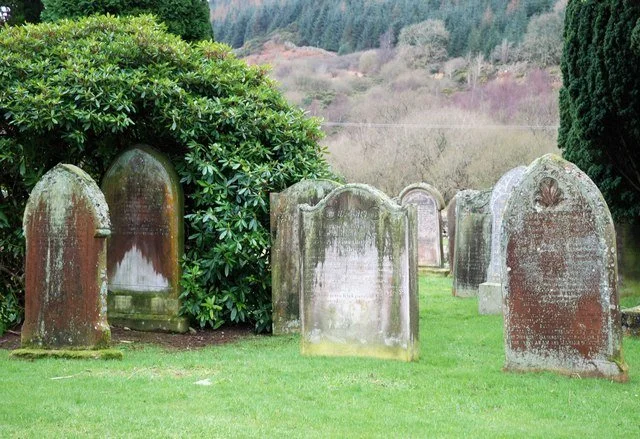
By 1790, the congregation had outgrown its 1757 structure. A second meeting house was built on the same parcel: a one-and-a-half-story frame building, sided with clapboards and wooden shingles, two front entrances on the facade, each flanked by windows. Those two separate entrances, a standard feature of Friends meeting houses in this era, reflect a custom of seating men and women on opposite sides of the room. This is documented architecture with a documented purpose, not regional peculiarity. The building's cemetery contains approximately fifty stones, with burials ranging from the 1790s through the 1880s. In 1989, both the 1790 Oswego Meeting House and the Friends' Cemetery were listed on the National Register of Historic Places under the Dutchess County Quaker Meeting Houses thematic designation.
THE SCHISM OF 1828
What happened in 1828 was not local. Elias Hicks, a Long Island Quaker farmer and traveling minister, had for years been preaching a Christianity shorn of creeds and paid clergy, emphasizing the Inner Light over scriptural authority. His opponents, aligned with evangelical Protestant currents and what they regarded as orthodox Quaker tradition, found his positions theologically untenable. By 1828, the dispute had fractured meetings across the northeastern United States into Hicksite and Orthodox factions, often splitting a single congregation with a precision that must have made shared worship uncomfortable in the months leading up to the break.
At Oswego, the Orthodox members departed for a meeting house in Poughkeepsie. The Hicksites retained the Oswego house. Neither side, in the historical record, described the other as having left the faith. They had, in the careful language of the era, "separated."
The Creek Meeting House in Clinton Corners tells a parallel story. Built between 1777 and 1782 of fieldstone, it too was divided by the 1828 schism. The Creek Meeting's property was eventually sold to the Grange in 1927, and in 1936 the Creek Meeting united with what would become the Bulls Head Meeting. The fieldstone building it left behind still stands on Salt Point Turnpike, also listed on the National Register. It is now a monument to a congregation that chose consolidation over dissolution, which is one of the less-remarked forms of institutional courage.
THE SCHOOLHOUSE THAT BECAME A MEETING HOUSE
Debbie Turner / geograph.org.uk, via Wikimedia Commons (CC BY-SA 2.0)
By 1939, a number of Oswego Meeting members had relocated north into the Town of Clinton. Returning to Moore's Mill had become, for practical purposes, no longer practical. They began holding worship occasionally at the home of Henry Wheeler on Bulls Head Road, which is a recognizably Quaker solution to a logistical problem. The meeting house is, after all, wherever the meeting is.
Permission was obtained to move a building. The Upper Bulls Head one-room schoolhouse, which had stood unused at the northeast corner of Willow Brook and Bulls Head roads, was physically relocated to a parcel on the Wheeler property. This is not legend. A schoolhouse was lifted from its corner and moved down the road, and the congregation that moved in consecrated it not with candles or liturgy but with the same silence it had been carrying, in various structures, since 1740.
The question the building poses is one that Quaker theology is well-positioned to absorb. A schoolhouse is designed for instruction. A meeting house is designed for listening. In the tradition of Friends, these are not entirely different activities. Both require you to sit still and pay attention to something you cannot quite name. The building's prior life as a place of learning does not appear, from the historical record, to have troubled anyone involved.
What it means to worship in such a building is perhaps best left to the worshippers. The record simply shows that they have been meeting there, under names and in configurations that shifted across two centuries, since before the county roads beneath them had their present names. They moved when the structure was too small, and when the schism made staying together impossible, and when the distance from home became too far. Each time, they carried the silence with them and found somewhere new to put it down.
The Bulls Head-Oswego Friends Meeting continues to gather at 1323 Bulls Head Road, Clinton Corners, NY 12514. For current meeting times and visiting information, consult the meeting's own listings.
SOURCES AND FURTHER READING
Anthony P. Musso, "Upper Bulls Head Schoolhouse Became Meeting House for Quakers," Beacon Journal, February 20, 2018
"Oswego Meeting House and Friends' Cemetery," Wikipedia
"Creek Meeting House and Friends' Cemetery," Wikipedia
Marty Aligata, via Wikimedia Commons (CC BY-SA 4.0)