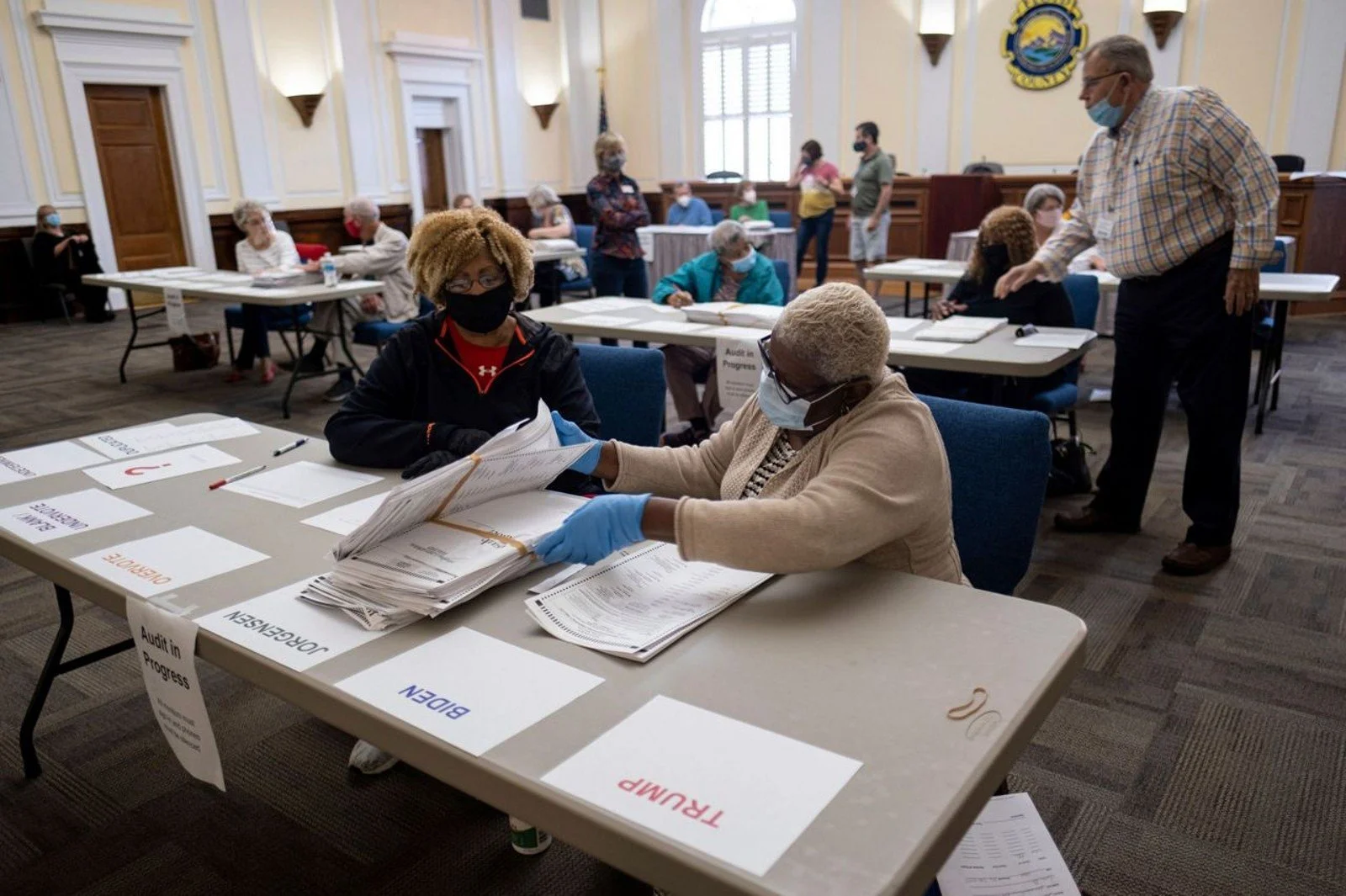
The count continues in Westchester.
By June Mercer | November 9, 2026
The scanners shut down on Election Night. That was the beginning of a count that is still running.
Three days after polls closed in Westchester County, the official vote count remains incomplete. Ballots are moving through central scanners in Ardsley. One county legislative seat sits at a margin of 246 votes. If the numbers hold when counting ends, the Westchester County Legislature goes all-Democrat for the first time. In Washington, a Brooklyn congressman is nine weeks from a moment that would be a first of its own kind.
All Westchester results cited in this report are unofficial and uncertified. Absentee, affidavit, and military ballots have not been counted. No results have been certified.
How Westchester's Election Day Fell Apart
It started with a programming error.
Scanners shut down countywide after software tied to a single Ardsley contest failed. The race in question was a village-justice contest that had been omitted from state reporting software. The error cascaded. Ballots across the county moved into secure emergency bags. Workers then transported those ballots to Ardsley for central scanning, according to the Westchester Board of Elections as reported by MyRye.
The process has advanced since November 4. The board scanned 15,467 ballots that Tuesday. The number jumped to 63,980 on Wednesday. By Thursday, November 6, the total reached 101,659. By approximately 5 p.m. Saturday, November 7, the board had scanned 181,106. At that update, the board provided no estimate for when the full count would conclude.
That scale matters. Westchester is a large and densely populated county. The November 7 figure of 181,106 represents a substantial portion of the expected vote. But the gap between that number and the final total remains unknown. The board has offered no public timeline.
The emergency-bag count is not a recount. It is the initial tally of ballots that could not be processed on Election Night. Until this count finishes, the board cannot certify the election. Certification is the legal gateway to everything that follows. No result is final until the full emergency count is done and the affidavit and absentee ballots are added to the total. A board scanning at this pace, from 15,467 on November 4 to 181,106 by November 7, faces days, not hours, to complete its work. Certification delays cascade. Challenges cannot be litigated without certified results. A close race cannot be called until the math is finished.
Every result that follows reflects where the count stood at a given moment. The official tally is not done.
The Race That Could Rewrite the Board
The most consequential uncalled race sits in District 15 of the Westchester County Legislature, covering Yonkers.
James Nolan is the Republican incumbent. He is also the only Republican on the legislature's 17-seat board. If he loses, the board has no Republicans. That would be a first. It would mean the legislature's entire delegation answers to one party. That changes how the body works. It changes what it can pass.
His challenger is Kisha Skipper, the president of the Yonkers NAACP. The race was close on November 6. Per the Black Westchester news brief, Skipper led 8,963 to 8,425 at that stage. That is a gap of 538.
By Saturday evening the count had grown and so had the lead. The Yonkers Ledger reported the race at 10,646 for Skipper, 10,386 for Nolan. That is a margin of 260. Black Westchester, filing at 6:30 p.m. on November 7, put it at 10,811 to 10,565. That is a margin of 246.
The two figures are not contradictory. The two outlets filed at different moments during an ongoing scan. Each captured the race as it stood at that point. The count continued after both filed.
A margin of 246 votes is not safe in a county where absentee ballots have decided close races before. Westchester elections have turned on absentee counts before. The outstanding pool of absentee, affidavit, and military ballots has not been tallied. That pool is unknown in size. It is capable of moving a close race. Affidavit ballots matter here. They are cast by voters whose registration is in question or who arrive after early voting ends. The pool is typically smaller than the absentee count, but in a 246-vote margin they move the outcome if they break one direction. Military ballots matter too. They can arrive after Election Day. No one knows how many of any of these categories remain uncounted. Until those ballots are scanned and added to the total, Skipper's lead sits on mathematical ground that is not solid.
Skipper has not declared victory. Nolan has not conceded.
Nolan Says the Election Was Stolen
On November 8, Nolan broke his silence with a statement that escalated rather than conceded.
The New York Post reported his words directly: "I am NOT conceding...all available legal options are being considered." He called the election "stolen." He offered no evidence for that claim in the reported statement.
Legal challenges take time. They cost money. They require evidence that courts will credit. Nolan has signaled he intends to pursue them. What that means in practice, and what it would do to the certification timeline, is not yet clear.
The board still has ballots to count. That is the more immediate question.
Westchester's Broader Verdict
District 15 got the most attention. But Westchester moved in one direction across most of its contested races. The night showed a wave, and the called races provided its measure.
Mount Pleasant Supervisor Fulgenzi, a five-term Republican incumbent, lost to Democrat Abinanti 10,737 to 7,453. That is not a close race. Five terms is a long tenure. The margin suggests something larger than candidate-level preference at work.
Legislator Cunzio, running on the Conservative ballot line, lost to Democrat Peppard 13,271 to 11,346. That race has been called.
The 17th Congressional District produced the county's most visible federal result. Democrat Conley defeated Republican Lawler 164,256 to 145,546. NY-17 had been a targeted race for Democrats all cycle. The margin reached more than 18,000 votes.
One race bucked the trend. Eastchester Supervisor Colavita held on for Republicans, beating Democrat Sayles 8,237 to 6,138. That was a comfortable margin.
Yorktown's supervisor race has not been called. As of November 7, Republican Ed Lachterman led Democrat Jann Mirchandani 9,029 to 8,111. The race remains open.
Bronxville residents approved a referendum to move village elections from March to November. The measure passed 1,342 to 1,305, a margin of 37. A similar measure failed in 2025. The narrow victory tells its own story. Even on a night when Democrats swept countywide, Bronxville remained divided on its electoral calendar. The vote was close enough that 19 votes in the other direction would have changed the outcome. It passed, but it did not command consensus. That reflects how these villages operate-tightly drawn, finely balanced, resistant to change even when broader currents move elsewhere. The referendum showed one thing: Westchester moved toward Democrats across races of consequence. The referendum showed another: it did not move uniformly, and it did not move without resistance.
Jeffries and the Speakership
While Westchester scans ballots, Hakeem Jeffries is watching a different tally.
Jeffries, the Brooklyn Democrat who leads the House Democratic caucus, is positioned to become the first Black Speaker of the House. He announced his intention to run in a November 4 letter to colleagues, cited by MS NOW. His caucus has given him unanimous support across two consecutive terms as House Minority Leader. No challenger has emerged.
The seat projections differ slightly by source. MS NOW reported Democrats holding an estimated 256 House seats. The Daily Mail and other outlets put the floor at at least 254, with Democrats also holding 54 Senate seats. Both projections describe the House majority as the largest Democrats have held since 2009. Final seat counts depend on races still being called.
A projected majority is not a certified one. The same caveat applies in Westchester.
Jeffries spoke on MS NOW on November 7. "It was an incredible victory for the American people and a decisive defeat for MAGA extremism," he said. He did not offer a floor count or a prediction. He offered a verdict on what happened.
The Platform and the Calendar
The timeline from here is tight, and the agenda is detailed.
House Democratic leadership elections are set for November 18 and 19. The full House casts its Speaker vote on January 3, 2027, when the new Congress is sworn in. That is 55 days away. The gap between the leadership vote and the floor vote is six weeks. Things happen in six weeks.
Jeffries has laid out a legislative agenda anchored on affordability and government accountability. He is committed to reversing cuts to Medicaid and SNAP benefits. He intends to end Trump-era tariffs. He has committed to extending Affordable Care Act tax credits and ending the Iran war. He has pushed for passage of the John Lewis Voting Rights Advancement Act, a bill designed to restore federal oversight of state voting practices and prevent voter suppression. That list is long. None of it moves until the gavel falls. The leadership elections on November 18 and 19 clear the path to January 3. The floor vote determines whether any of it reaches his desk.
The Floor Vote Math
A House Speaker needs a majority of members present and voting. That is a different calculation than a majority of the full chamber. Members absent, seats vacant, votes withheld-each of those narrows the threshold on one side and raises it on the other.
Democrats have learned this lesson before. A large projected majority provides cushion. How much cushion depends on who shows up on January 3. That is not a question anyone can answer today.
Jeffries' two terms in the minority produced no visible fractures in his caucus. No bloc has named conditions. No member has broken ranks publicly. That is a different political environment from the one the previous Republican leadership faced within its own party.
Whether Jeffries reaches January 3 as Speaker-elect or as Speaker depends partly on seat projections that are still shifting. It depends on the leadership vote in two weeks. It depends on factors that are, at this hour, unresolved.
Two Counts Still Running
Westchester and Washington share a condition this week: neither tally is finished.
In Yonkers, 246 votes separate Skipper from Nolan. Absentee ballots could close that gap or widen it. Affidavit and military ballots remain uncounted. A legal challenge could delay certification or change nothing. The first all-Democrat Westchester County Legislature exists as a projection, not a fact. The board has to finish counting before it becomes real.
In Washington, 254 or 256 projected House seats could become a Speaker's majority or fall short on the floor. The number is not yet certified. The vote is not yet scheduled. The history is not yet made.
Both stories follow the same logic. Something historic may be arriving. It arrives when the count ends, not before. The scanners are still running. The calendar is still moving.
History does not wait on deadline. It waits on the final number.
Sources
- Black Westchester: 2026 Westchester midterm results after countywide machine failure
- David McKay Wilson: Westchester vote count nears end
- Yonkers Ledger: Skipper holds edge in close county legislative race
- NY Post, Nov 8: Nolan claims stolen election after vote machine chaos
- MyRye: WBOE emergency ballot update
- Jeffries House Office: MS NOW transcript, Nov 7