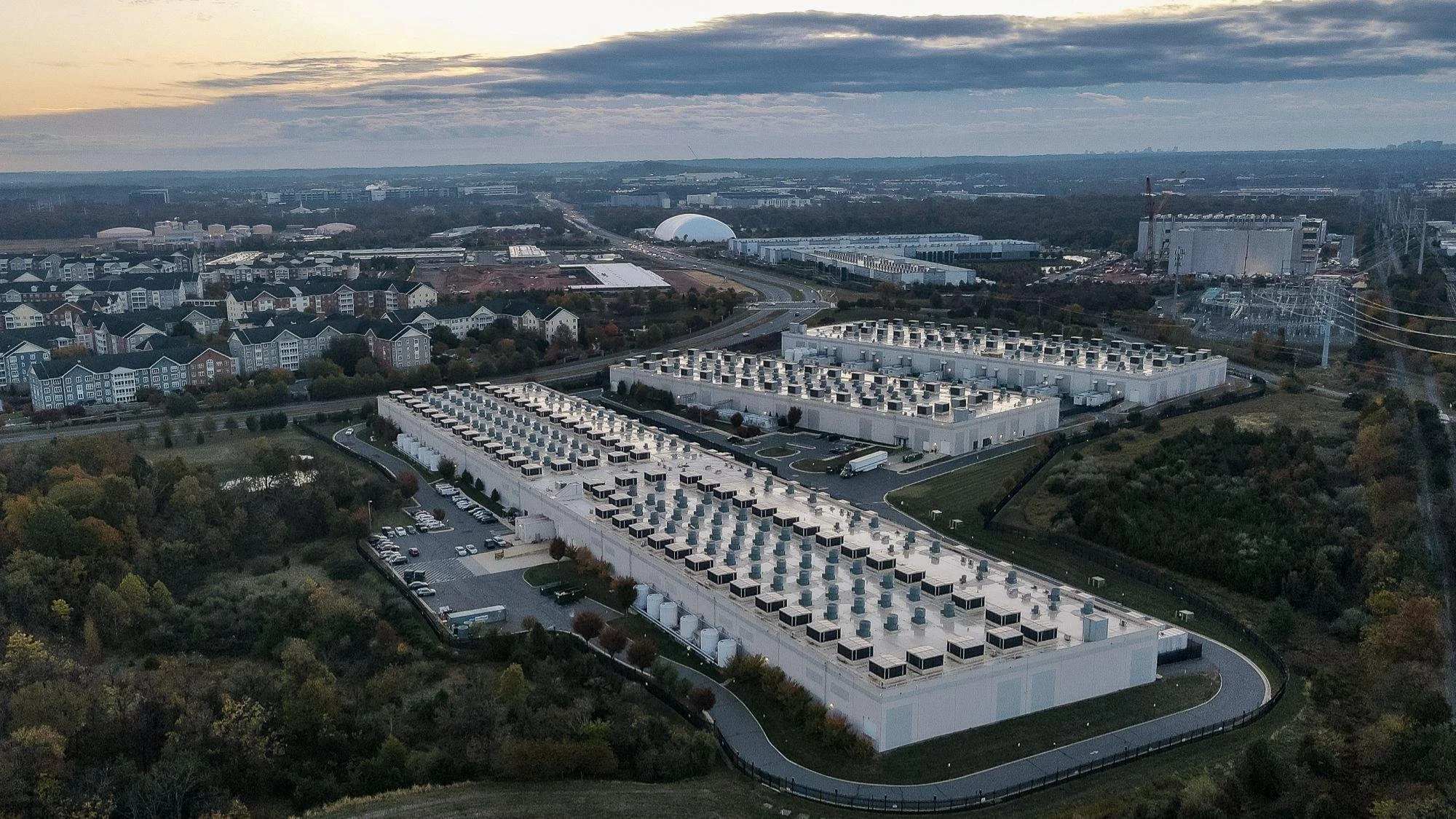
Data centers went to the voters on Tuesday.
By Mara Quinn | November 7, 2026
Forty of Forty-One
Forty of 41 ballot measures across ten states voted on November 3 limited or prevented data center development, according to a Ballotpedia tally analyzed by the Associated Press. That is a result, and a lopsided one.
In Edgewater, Florida, 77 percent of voters chose to ban new data centers outright. That is a community that voted to cut off a full category of development by more than three to one. The lone exception was Harwood, North Dakota, where voters rejected a proposal to add extra review of industrial projects, declining an opportunity to impose more scrutiny on the development the measure would have covered. The pattern held in the other 40 jurisdictions.
The Hudson Valley was not among them. No data center measure appeared on the November 3 ballot here. This region's fights over data center development have played out in zoning hearing rooms and before town boards, over questions of power draw, water supply, tax abatements, and traffic, as this publication has covered. Tuesday's results provide a national data point the Valley has not had occasion to generate: given a direct vote, do local residents say yes or no to data center development?
The national answer was no, by a margin of 40 to 1.
Governor Races Sent the Same Signal
The local ballot measure results did not stand alone. Gubernatorial contests in data-center hot spots produced consistent outcomes in the same direction.
Democrats flipped at least five governorships and took full control of six states, including Arizona, Wisconsin, Minnesota, Pennsylvania, Nevada, and Michigan, according to AP. In Texas, Ohio, and Georgia, three of the country's largest data center markets, Democratic candidates ran explicitly on platforms that included stricter regulation or development restrictions. They won.
The Texas results drew the closest attention. Clayton Tucker became the first Democratic state agriculture commissioner in Texas since 1986. Tucker told AP that his pledge to fight data center development was critical to his victory. Texas governor-elect Gina Hinojosa's win attracted a sharper assessment from Wall Street: Morgan Stanley called it the "most important election result" for data center development this cycle.
Texas is on track to overtake northern Virginia as the largest global data center market by 2030, according to a commercial real estate report cited by AP. Placing that projected trajectory alongside Hinojosa's election creates a tension neither statistic alone resolves. How a data-center-skeptical Texas governor interacts with the state's projected market dominance is now a live political and business question without an obvious answer.
Nationally, Data Center Watch, a project of 10a Labs tracking the races, reported that 32 of 34 victorious gubernatorial candidates support stronger regulation or restrictions on data center development, according to AP. Twelve of those 34 support outright bans or moratoriums. Wisconsin Governor-elect David Crowley was described by AP on Thursday as being in discussions about what he will propose once in office; no specifics have been announced.
$380 Million, Spent Mostly One Way
Candidates and outside groups spent more than $380 million on television advertisements mentioning data centers during this cycle, according to AdImpact data reported by AP. Democrats outspent Republicans three to one on the topic.
That spending ratio reflects where political momentum sat heading into Election Day. It also reflects a strategic bet: that running against data center development would produce votes. The results suggest it did.
An AP voter poll conducted around the election found that about three-quarters of U.S. voters oppose construction of a new data center in their community. About one-quarter said that AI data centers were important to their vote for Congress.
Those two figures coexist without contradiction. Voters can regard something as economically important and still want it somewhere else. That pattern is familiar from energy infrastructure debates, nuclear siting disputes, and warehouse development fights. Data centers appear to have joined that category of development that voters accept in the abstract and resist in proximity. The polling puts a rough national number on that resistance: three to one, against.
OpenAI Moves as Results Come In
On Thursday, November 5, two days after Election Day, OpenAI published a framework enumerating new commitments to communities where it develops data centers. The company did not describe the framework as a response to the election results. Its timing placed it in the same week as a substantial change in the political environment for data center development.
What the framework contains, and how binding its commitments prove in practice, will matter more over time than when it was published. It signals that at least one major AI developer now treats community relations in data center siting as something that requires a formal written response.
What Wall Street Made of the Results
The Nasdaq sank to 11 percent below its all-time high in the days following the election, with AP reporting that investor concern centered on the possibility that data center construction may slow as borrowing costs remain elevated and regulatory pressure builds.
Morgan Stanley, in a note cited by AP, said the decisive Democratic results carry "greater expectations for data center restrictions" and could "split the country into areas open to new data centers and those without." That framing captures something specific: not a uniform slowdown, but a geographic divergence, with some states and localities remaining open to new development while others restrict or halt it.
The implications for capital allocation are not theoretical. Developers and their lenders will route projects toward permissive jurisdictions if restrictive ones generate delays, litigation, or bans. The Morgan Stanley language implies that process is now accelerating. What was previously a jurisdiction-by-jurisdiction fight, resolved through administrative channels, may become a more explicit sorting of which states and localities are in the market for large-scale data center development and which are not.
The Valley's Hearing-Room Process
The Hudson Valley has conducted its data center fights through a different mechanism than the ballot box. Town boards and zoning boards have been the venues; public comment periods have been the structured opportunity for opposition; and administrative decisions, with their attendant legal reviews and appeals, have been how outcomes were determined.
This process filters the question differently than a ballot measure does. A zoning hearing draws the most engaged participants on both sides, including project proponents with professional resources and organized opposition with detailed concerns about specific sites. A ballot measure reaches every voter who turns out, including residents whose only exposure to the issue is what they absorbed from campaign mailers and yard signs.
The AP voter poll's finding that about three-quarters of U.S. voters oppose a new data center in their community is not a Hudson Valley survey. It is a national figure, and the Valley is not nationally representative. But it is consistent with what has been reported from public meetings in this region: concern is not confined to a narrow activist constituency. It runs through planning board hearings, town supervisor races, and written public comment.
No data center measure appeared on the November 3 ballot in the Hudson Valley. That reflects the structure of New York's direct democracy more than the absence of controversy. New York does not offer the kind of ballot initiative process that allowed 41 measures across ten other states to reach voters directly. The fight here remains in the hearing room, where it has always been.
A Test Not Yet Run
The national record now shows what happens when voters are asked directly about data center development in their communities. It happened 41 times on November 3. It went 40 to 1 against.
That record does not say what a Hudson Valley referendum would produce. It says what 40 referendums in 10 other states produced. The gap between that record and the local situation is real, but the direction of the national signal is not ambiguous.
For advocates opposing specific projects here, the national results function as external validation of an argument that often goes unquantified locally: that community opposition runs wide, not just deep. For project developers and the municipalities considering tax-break agreements, the results are a reminder that the administrative path to approval and the political reality of a hypothetical public vote are not the same calculation.
The Morgan Stanley read is that the country may sort into data-center-receptive and data-center-resistant geographies. Where the Hudson Valley lands in that sorting depends on decisions being made now, in hearing rooms and town halls, by officials who were not asked to hold a referendum in November 2026 and may not be asked to hold one anytime soon.
The question was asked in 10 states. The answer was no, 40 times. The Valley is waiting for a question that has not been put to it yet.
Sources
- Associated Press, election coverage: data center ballot measures and governor races, November 2026
- Data Center Watch (10a Labs), gubernatorial candidate tracker, via AP
- AdImpact campaign advertising data, via AP
- Philadelphia Inquirer ballot measure analysis, via AP
- Ballotpedia, 2026 ballot measures
- OpenAI, community commitments framework, November 5, 2026