Flu arrived weeks early in New York this year.
By Mara Quinn | November 7, 2026
A Declaration That Came Early
New York declared influenza prevalent statewide on October 26. State Health Commissioner Dr. James McDonald signed the declaration. It arrived more than a month before the same threshold was crossed last season. In December 2025, state health officials made the equivalent call. This year, the virus had enough reach to trigger a statewide prevalence declaration before Halloween.
The week-over-week numbers show how fast the climb came. The New York State Department of Health dashboard recorded 7,696 confirmed flu cases for the week ending October 31, the Democrat and Chronicle reported on November 7. For the week ending October 24, that figure was 77% lower. In a single week, confirmed infections grew by more than three-quarters. The jump came before the season had even reached its typical peak months.
The state's season-to-date total stood at 18,739 confirmed cases as of that report. That figure covers the full run of the season through October 31, not just a single week. It reflects a season that arrived earlier than last year by more than a month. The comparison to last year is direct: a season declared prevalent in December 2025 versus one declared prevalent in October 2026. The gap between those two dates is the clearest measure of how unusual this season's timing is.
Earlier in the season, on October 29, Tompkins County Whole Health issued an advisory reporting that statewide figures showed 6,499 cases and 432 hospitalizations at that point. Those numbers moved considerably in the days that followed. The Tompkins County figures capture a moment before the sharpest acceleration took hold.
The difference between that October 29 snapshot and the October 31 dashboard figures tells part of the story. Hospitalization counts moved from 432 to 688 in the same compressed window. That movement reflects the pace at which a rapidly spreading flu season can shift public health conditions on the ground. A change of that size in roughly 48 hours is a signal the state's data was already registering before the governor's office weighed in.
Governor Hochul Issued an Early Warning
Governor Kathy Hochul addressed the flu situation in late October. At the time of her remarks, she cited figures showing flu cases were up 25% over the prior week and that hospitalizations had risen 30%. She also reported two pediatric flu deaths in New York. Those figures reflected conditions as of her late-October statement, based on remarks posted on governor.ny.gov.
The governor's warning came as the flu curve was still steepening. The numbers she cited aligned with the accelerating pattern that NYSDOH data recorded through the end of October. Her statement put public focus on the speed of the spread before the state's highest single-week figures were fully confirmed.
The two pediatric flu deaths reported by the governor at that point represent the most serious dimension of this season's early toll. Public health agencies monitor pediatric flu fatalities specifically because children face particular risks from severe influenza. Deaths in that age group are tracked and reported separately from broader case counts. The governor cited two such deaths in late October, before the season's most active weeks, making the figure significant in the context of an early-arriving season.
What the Data Shows
The NYSDOH dashboard figures for the week ending October 31 form the clearest single-week picture available as of November 7. That week recorded 7,696 confirmed cases and 688 hospitalizations statewide, according to the Democrat and Chronicle. The season-to-date case total through that week was 18,739.
A separate report from News 12, published November 6, noted that more than 300 New Yorkers were hospitalized with flu during the current week at the time of that report. That figure differs from the 688 hospitalization count the NYSDOH dashboard recorded for the week ending October 31. The two numbers reflect different measurement periods and come from different snapshots of state health data. The News 12 figure covers a different span of days than the dashboard's week-ending-October-31 count. Neither number cancels the other out. They should not be added together or treated as measuring the same thing.
Both figures, read on their own terms, describe a health system managing a significant flu burden. The dashboard data tracks confirmed cases and hospitalizations across the full state for a completed reporting week. The News 12 figure reflects a current-week hospitalization count reported on November 6, during a different and partially elapsed reporting period. Readers should understand them as separate windows into a moving situation, not as competing totals.
The Tompkins County Whole Health advisory from October 29 adds an earlier baseline. At that point in the season, statewide figures showed 6,499 cases and 432 hospitalizations. Those figures were already high for so early in the fall. The jump to 7,696 cases and 688 hospitalizations for the week ending October 31 came within days of that advisory, illustrating how fast conditions shifted.
National Scale From Last Season
The 2024-25 flu season is the most recent for which complete national data exists. The Centers for Disease Control and Prevention estimated 51 million flu illnesses, 710,000 hospitalizations, and 45,000 deaths across the United States. The Tompkins County Whole Health advisory cited those figures in its October 29 alert.
Those totals accumulated over a full season, not a single week or month. New York's current numbers cover only the opening weeks of the 2025-26 season. The scale of last year's national burden puts the significance of early, rapid spread into context. When confirmed cases in a single state nearly double in one week before November begins, the national numbers from the prior season offer a reference point for how quickly volume can accumulate.
A season that starts fast in a large, densely populated state does not automatically follow a predetermined path. But the trajectory through October and into early November, combined with the governor's late-October warning, makes the national figures from 2024-25 more than background information.
Symptoms, Guidance, and When to Get Help
The New York State Department of Health lists the common symptoms of influenza as fever, cough, sore throat, body aches, and fatigue. Those symptoms can come on suddenly. Severity varies from person to person, but flu can cause serious illness, particularly in older adults, young children, pregnant people, and those with underlying health conditions. With the season already declared prevalent statewide and confirmed cases accelerating through October, knowing the symptoms and what to do about them is a practical starting point.
Get Vaccinated
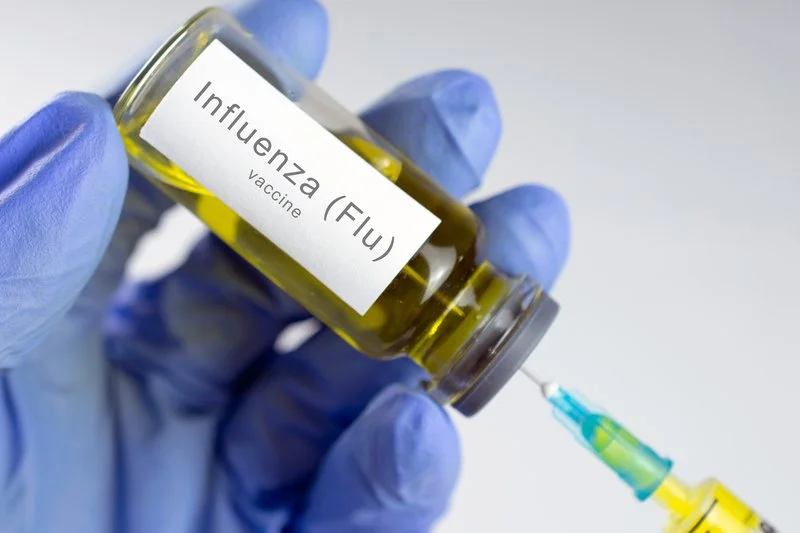
NYSDOH strongly encourages flu vaccination. CDC guidance recommends it as the most effective available tool for reducing the risk of serious illness from influenza. Vaccination can lower the risk of infection and reduce the severity of illness for those who do contract flu after being vaccinated.
With the season already active and moving fast, public health officials indicate there is still time to get vaccinated. Flu vaccines are widely available in New York at pharmacies, clinics, and health care providers. NYSDOH guidance points people toward vaccination as a first step in protecting themselves and those around them, especially for people who care for or live with individuals at higher risk of serious illness.
Stay Home When Sick
NYSDOH advises people experiencing flu symptoms to stay home and limit contact with others. Staying home reduces transmission to coworkers, household members, and community contacts who may be more vulnerable to severe disease. The guidance on this point is consistent from state health officials and applies as long as symptoms are present.
Practice Good Hand Hygiene
Frequent handwashing with soap and water remains a standard recommendation from public health authorities to reduce the spread of respiratory illnesses including flu. When soap and water are not available, an alcohol-based hand sanitizer is the alternative recommended by CDC and NYSDOH guidance.
When to Seek Medical Care
Public health guidance from NYSDOH and the CDC identifies warning signs that call for prompt contact with a health care provider. For adults, those signs include difficulty breathing, persistent chest pain, confusion, severe or persistent vomiting, and symptoms that appear to improve but return with worsening fever or cough.
For children, warning signs include fast or troubled breathing, bluish lips or face, chest pain, severe muscle pain, dehydration, seizures, and symptoms that return with fever and worsening cough after initially appearing to improve. Anyone concerned about their symptoms or the symptoms of someone in their care should contact a health care provider. This guidance reflects NYSDOH and CDC public health recommendations, not individual medical advice. The appropriate response to any set of symptoms depends on a person's individual health circumstances, which only a clinician can assess.
The NYSDOH dashboard updates every Friday with the previous week's figures. The next scheduled release will include data for the week ending November 7, the first full week of November. That update will show whether hospitalizations continued climbing past the 688 recorded for the week ending October 31. Anyone tracking how the season develops can check the dashboard directly at health.ny.gov to see where the numbers stand.
The flu season arrived early. The state's data confirms it moved fast. The figures from the final days of October are a snapshot in time. What the full season produces will depend on how quickly the virus continues to spread and how many New Yorkers take the steps that public health officials recommend.
Sources
- Democrat and Chronicle: "NY flu cases jump 77% in a week" (Nov. 7, 2026)
- Tompkins County Whole Health: "Flu Already Prevalent in NYS; Vaccination Strongly Encouraged" (Oct. 29, 2026)
- Governor Kathy Hochul: remarks cautioning New Yorkers as flu cases rise (governor.ny.gov)
- News 12 Hudson Valley: flu season arrives early, 300+ New Yorkers hospitalized (Nov. 6, 2026)
- New York State Department of Health: Seasonal Respiratory Virus Dashboard