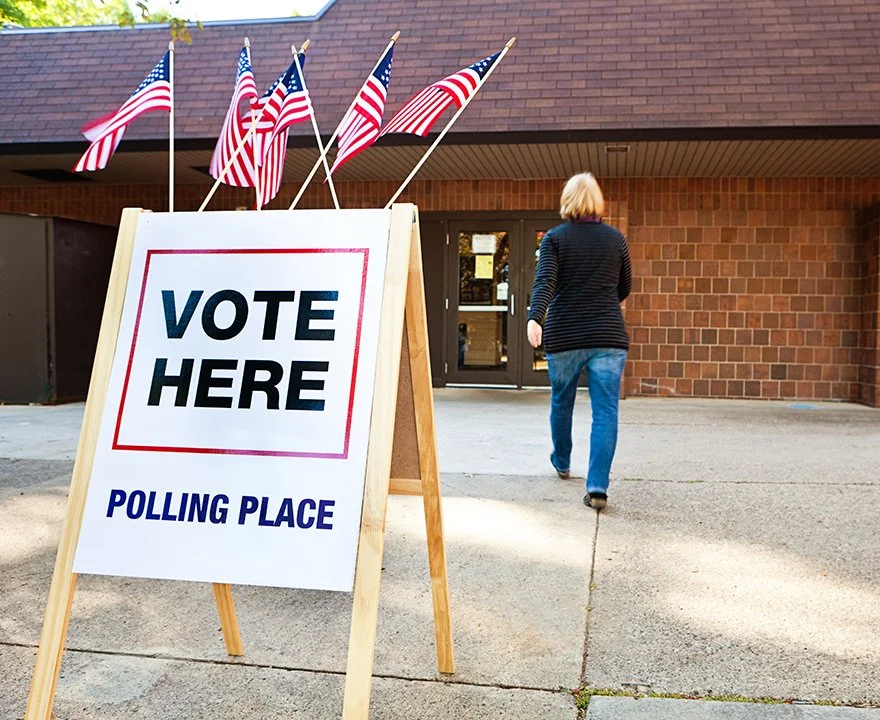
The industry met the voters on Tuesday.
By Ellis Ward | November 7, 2026
Voters handed the AI data center industry its first major political reckoning Tuesday, electing Democratic governors across at least five states that rank among the nation's fastest-growing construction markets and passing local restrictions in 40 of 41 ballot measures nationwide.
The results reshaped the regulatory map for a sector that spent more than $380 million on television advertising in the final weeks of the campaign.
A Democratic Wave in Data Center Country
Democrats flipped governor seats in Texas, Ohio, Georgia, and at least two other states where data center construction has concentrated in recent years, according to AP reporting. The party now holds full control in at least six states – Arizona, Wisconsin, Minnesota, Pennsylvania, Nevada, and Michigan – many of them won by candidates who ran explicitly on data center regulation platforms.
The candidate data tells a consistent story. Data Center Watch, a tracking project run by research firm 10a Labs, found that 32 of the 34 candidates who won governor races support stronger regulation or restrictions on new facilities. Twelve of those candidates support outright bans or moratoriums. Among tracked congressional winners, the vast majority expressed support for stronger oversight or a moratorium, according to Data Center Watch, cited by AP.
In Texas, Democrat Gina Hinojosa's win in the governor's race drew immediate attention from industry analysts as the single most consequential result for data center development in the country. Texas is on track to overtake northern Virginia as the largest data center market in the world by 2030, according to commercial real estate figures cited by AP. The industry now faces the question of what that trajectory looks like under a governor who ran on restricting the sector.
Also in Texas, Democrat Clayton Tucker won the state agriculture commissioner's race – the first Democrat to hold that office since 1986. Tucker told AP that his pledge to oppose data center development was central to his campaign and to his win.
In Wisconsin, Governor-elect David Crowley told AP on Thursday that he is already in discussions about what regulatory proposals he will put forward once he takes office. He declined to offer specifics.
The pattern held across states. Candidates who built platforms around data center restrictions won in markets where the industry has invested heavily and where voters appear to have decided that investment comes with costs they did not consent to absorb.
A Referendum Rout
The race results tracked closely with how communities voted when given a direct say. The Philadelphia Inquirer tallied 41 local ballot initiatives across 10 states; 40 of them limited or prevented new data center construction. Data from Redbud Consulting cited by AP, and tracking from Ballotpedia, confirmed the breadth of the sweep.
Edgewater, Florida, produced one of the clearest single results: 77 percent of voters approved a charter amendment that prohibits new data centers outright in the city.
The only measure to fail was in Harwood, North Dakota, where voters rejected a proposal that would have required additional industrial review for proposed facilities.
The AP Voter Poll found that roughly three-quarters of U.S. voters oppose data center construction near their communities. That opposition has remained stable across polling but translated into concrete ballot outcomes in ways the industry had not fully anticipated going into Tuesday.
About one in four voters told the AP Voter Poll that AI data centers factored into how they voted for Congress – a share significant enough to influence close races in multiple states and to elevate what had been treated as a local permitting question into a nationalized political issue.
Wall Street's Reckoning
Markets moved before the final vote tallies cleared. By Thursday, the Nasdaq had fallen 11 percent below its all-time high, with investor concern centered on two compounding pressures: rising borrowing costs that make new data center construction more expensive, and the prospect of state-level restrictions that would limit where that construction can proceed at all.
Morgan Stanley issued an analyst report Thursday that put the concern plainly. The Democratic results, the report said, carry "greater expectations for data center restrictions" that could "split the country into areas open to new data centers and those without."
That split-country scenario would force capital reallocation at a scale the sector has not faced before. Projects in Texas, the Sun Belt, and the Midwest that were assumed to be on firm regulatory ground now sit in states headed by governors who campaigned against them. The permitting calendar for 2027 looks considerably different than it did two weeks ago.
$380 Million, and What It Bought
The industry and its political allies spent heavily. AdImpact data cited by AP tracked more than $380 million in television advertising that mentioned data centers during the campaign cycle. Democrats outspent Republicans in that category by roughly three to one.
The spending did not hold the line. Candidates who ran against data center expansion won in market after market where the industry had concentrated its ad buys. Measured in electoral outcomes, the return was poor.
OpenAI Moves First
OpenAI published a community-commitments framework on Thursday, two days after election day. The document outlines pledges the company said it would make to towns and regions that host its infrastructure.
The company did not comment publicly on the election results. The timing of the release – before most newly elected governors had held their first press conferences – positions it as a preemptive response to the political environment rather than a routine disclosure. Whether other major operators follow with similar frameworks will be one of the first signals of how the industry intends to navigate what comes next.
What Comes Next
The governors-elect begin taking office in January. David Crowley in Wisconsin told AP he has not yet finalized his regulatory proposals. Gina Hinojosa's transition team in Texas has not outlined a specific data center legislative agenda.
Morgan Stanley flagged that uncertainty as a material risk for projects already in early construction or the permitting pipeline. The first legislative sessions of 2027 will determine how campaign platforms become law, and how aggressive the regulatory push actually proves to be when it encounters legal challenges, economic pressure, and the competing priorities of governing.
For now, the electoral record is unambiguous. Candidates who ran on data center restrictions won in the country's most critical markets. Communities that voted on the question directly sided with them in 40 of 41 cases. The industry enters 2027 with less political cover than it had going into Tuesday, and with fewer friendly governors in the states it needs most.
Sources
- Associated Press, election coverage: data center ballot measures and governor races, November 2026
- Data Center Watch (10a Labs), gubernatorial candidate tracker, via AP
- AdImpact campaign advertising data, via AP
- Philadelphia Inquirer ballot measure analysis, via AP
- Ballotpedia, 2026 ballot measures
- OpenAI, community commitments framework, November 5, 2026