How a Plate Reader Actually Works, and What Dutchess County Still Has to Decide
By Ellis Ward | RFTUV
Dutchess County's 65 Flock Safety cameras went dark on September 25, 2026, after the district attorney and the sheriff withdrew their support for the program. The cameras are still physically attached to poles around the county; they are simply not recording. For many residents, that feels like the end of the story. It is not. The more consequential questions, about data already collected, about who can still search it, and about what the county's towns and cities do next, are still open.
This piece explains how the technology works, what the county's shutdown actually does and does not change, and what policies would need to say to give residents meaningful control.
What the camera captures
A Flock Safety camera, according to Herald reporting on the company's own description of its product, does several things at once when a vehicle passes through its field of view. It photographs the license plate. It also records the vehicle's make, color, and type, and logs the time, date, and location of the pass. All of that gets uploaded to a cloud database that law enforcement customers can search.
Flock says its cameras are motion-activated, meaning they capture vehicles moving through their view rather than running continuously. The company says it does not sell personal data and that data ownership stays with the agency or municipality that purchased the service.
One detail to understand: Flock says that plate and vehicle characteristics together can identify a vehicle even without a readable plate. A partial plate combined with a silver pickup truck of a specific make, photographed at a particular intersection at 7:14 a.m., may be enough to narrow a search considerably. The camera is building a description of every vehicle that passes.
Where the data goes
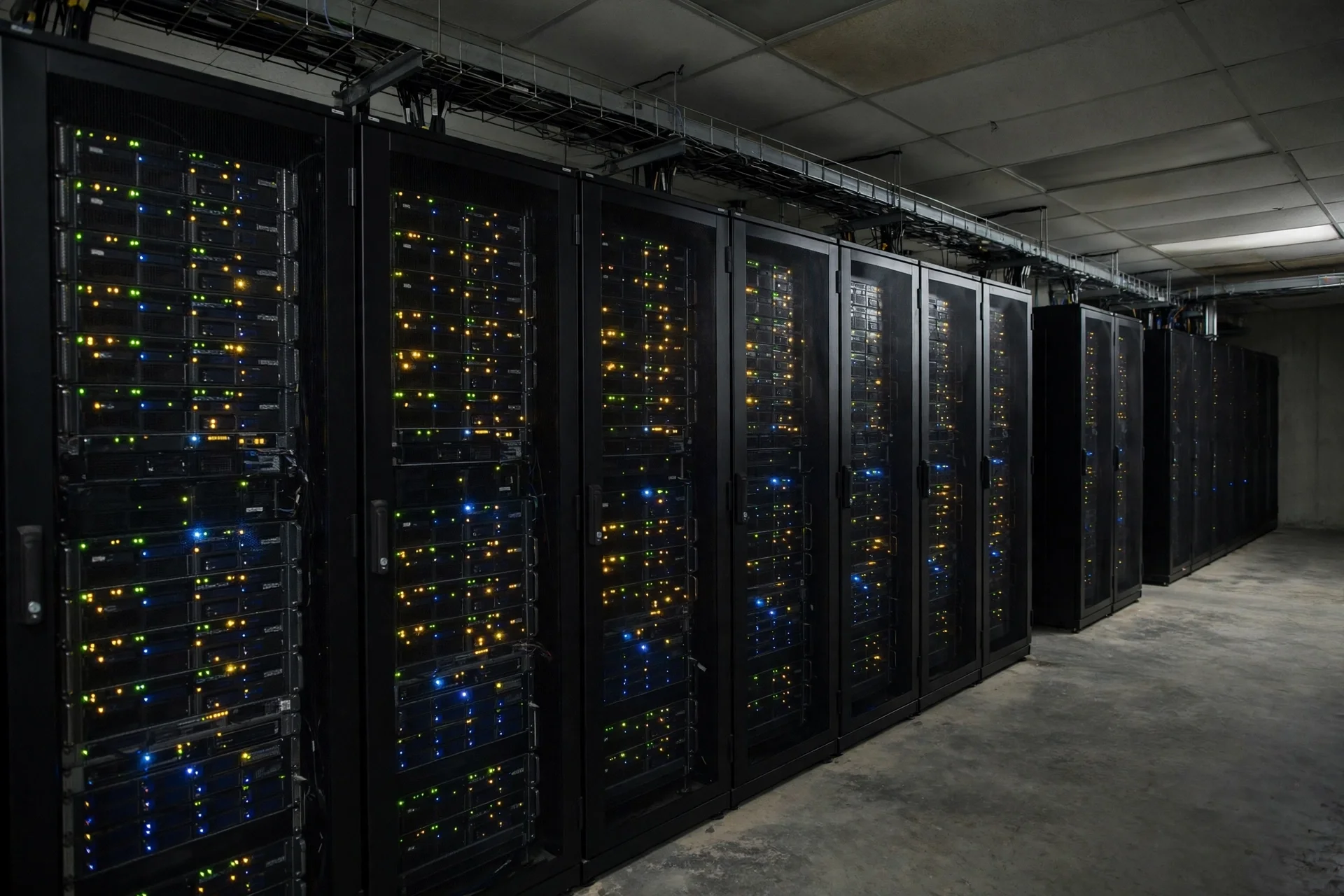
Each record goes into a cloud database. Law enforcement customers can search that database. What matters for privacy is not just who runs the camera but who has access to search the records it produces, under what rules, and for how long those records are kept.
Flock's default data retention period is 30 days, meaning records are deleted after a month unless a customer chooses a different setting. That choice belongs to the agency, not to Flock. An agency could set retention shorter or longer, and residents generally would not know which unless the policy is published.
Dutchess County joined the Area Real-Time Crime Information Center, known as ARTCIC, in November 2024. The county invested more than $200,000 in ARTCIC that same month. ARTCIC is described as a quarter-billion-dollar shared regional network. Participation in a shared network like that raises a specific question that a camera-by-camera count does not answer: which agencies can query which data, under what authorization, and with what logging. Those questions apply regardless of whether a given camera is on or off.
Off is not the same as gone
When the county's cameras stopped recording on September 25, they stopped adding new records to the database. Records already in the database, up to 30 days' worth by Flock's default, did not disappear automatically on that date.
The public record does not yet show a confirmed answer to what happens to those existing records: whether they have been deleted, whether they remain searchable, and by whom. That distinction matters. A county that turns off cameras but leaves prior records accessible to a regional network has reduced its collection footprint, but it has not resolved the access and retention question.
The cameras themselves are staying in place during a removal process of up to 30 days, according to Herald reporting. Town and city cameras are a separate matter. They operate under different jurisdictions and different policies. The county's decision to go dark has no automatic effect on cameras operated by Poughkeepsie or any other municipality. June Mercer's county explainer at RFTUV, including its "How to check what is still watching" section, is useful here: Dutchess pulls its Flock cameras after residents push back. For the city picture specifically, Callahan Blackwood's reporting covers Poughkeepsie's continued operation: The county turned its cameras off. Poughkeepsie has not.
Why town policies differ
Not every jurisdiction in Dutchess is waiting to see what the county does. The differences are instructive.
Pine Plains passed oversight rules for plate readers. Milan's town board voted unanimously on September 21 to prohibit automated license plate reader use until proper policies are in place. Hyde Park removed Flock Safety from its grant application. These are three distinct responses to the same technology and the same absence of a county-wide framework.
The variation reflects something real: in the absence of state law or county policy setting baseline rules, each municipality is effectively writing its own standard, or choosing not to write one. A resident in one town may have meaningful protections. A resident in the next town over may have none, and no easy way to find out which situation applies to them.
What to ask next
The county cameras are off. That is a significant change in collection. The questions that remain are procedural, and they are not small.
First, what happens to data already collected? Has the county issued any directive to Flock regarding deletion of existing records? If not, what does the contract specify?
Second, who can search the existing data, and through which network? If county data was accessible through ARTCIC, does that access end when the cameras go offline, or does it persist until records age out under the retention policy?
Third, what should a town policy actually say? A meaningful ordinance covers more than whether cameras are on or off. It specifies retention limits, identifies which agencies may query the data, requires logging of searches, and establishes a process for residents to find out whether data about their vehicle exists. Pine Plains and Milan have started this work. Other towns have not.
Fourth, what does the county's ARTCIC membership mean going forward? Dutchess budgeted $94,500 in 2026 for Flock Safety as part of a proposed $2.6 million public safety equipment package, and it received a $1.2 million DOJ grant for law enforcement technology. Those investments are in a network, not just in individual cameras. Whether the county scales back, restructures its participation, or continues building out that network is a question with real policy implications that the current shutdown does not settle.
For residents trying to locate cameras in their area, two volunteer mapping projects cover Flock installations nationally: DeFlock at deflock.org and FlockHopper at dontgetflocked.com. Both are crowdsourced and may be incomplete or out of date, but they are the best publicly available picture of where cameras have been reported.
The camera count is not the whole picture
Counting cameras is a reasonable starting point for understanding a surveillance network. It is not a sufficient end point.
The number of cameras tells you something about how much data is being collected. The retention period, the access rules, the network architecture, and the contractual terms tell you what happens to that data, how long it persists, who can use it, and whether anyone is accountable for how it is used. Dutchess County took a meaningful step on September 25. The harder policy work is still ahead.
Sources and further reading
New Pine Plains Herald: "Dutchess orders removal of Flock cameras after officials abandon program"
New Pine Plains Herald: "Six months after Pine Plains passed Flock oversight rules, Milan adopts its own"
RFTUV, June Mercer: "Dutchess pulls its Flock cameras after residents push back"
RFTUV, Callahan Blackwood: "The county turned its cameras off. Poughkeepsie has not."