The County Turned Its Cameras Off. Poughkeepsie Has Not.
By Callahan Blackwood | October 4, 2026
The 65 Flock Safety license plate reader cameras operated by Dutchess County went offline on Friday, September 25, 2026. District Attorney Anthony Parisi and Sheriff Kirk Imperati had withdrawn their support two days after a public forum in Pleasant Valley drew residents who said plainly that they did not want to be watched this way. That is the county's decision, and it covers county cameras. It does not cover anyone else's.
The City of Poughkeepsie is someone else.
What the county decided, and what it did not
The county moved quickly after the September 23 forum. Sheriff Imperati told the Poughkeepsie Journal: "We asked for their views, and we have a responsibility to act on what we heard," according to The Miscellany News, Vassar College's student newspaper, which covered the forum in detail. That quote matters as a statement of intent and as a model of accountability: officials asked, residents answered, and the officials acted. This is worth noting, because it does not always work that way.
Residents raised substantive concerns at the forum, not vague ones. A Poughkeepsie resident, Sandra Patterson-Thompson, argued that the cameras are often inaccurate, according to The Miscellany. Other residents pointed to the placement of Flock cameras across the city, noting they had been concentrated disproportionately on the North side of Poughkeepsie. Hyde Park resident Charlie Latino argued the cameras could be used to arrest people for crimes they did not commit, according to The Miscellany. These are not peripheral objections. They go directly to whether the technology is reliable and to who absorbs the consequences when it is not.
The county heard those concerns and acted on them. The cameras went off. The question is what happens inside city limits, where the county's decision carries no authority.
Our own June Mercer has the full county story: "Dutchess pulls its Flock cameras after residents push back"
The city question
The Miscellany News reported on October 1 that the county's withdrawal does not reach cameras owned by other jurisdictions. License plate readers may remain in the City of Poughkeepsie unless Mayor Yvonne Flowers or the Common Council act to remove them. Neither Flowers nor Police Chief Richard T. Wilson responded to the Miscellany's requests for comment on how the city intends to move forward.
That silence is not a decision, but it is a posture. It is worth being precise about what the public record does and does not contain.
Mayor Flowers has spoken on plate readers before, and she has not been vague about where she stands. In a September 16 interview with Mid Hudson News, she said she would have further conversations with Chief Wilson and the vendor about concerns raised by the public. She described the cameras as beneficial. She said that if they were removed, a replacement would be needed. That interview came two weeks before the county forum and ten days before the county cameras went offline. Whether her position has shifted since then is not known, because she has not said. Chief Wilson has made no public statement that The Miscellany or this publication has been able to report.
The mayor's September 16 position suggested a disposition to keep the cameras, with adjustments if warranted. It did not suggest she was looking for an off-ramp. A change in that position, if it comes, will require either a change in her own judgment or sustained pressure from residents or the council. Nothing in the public record indicates the first is coming. The second has not yet materialized.
Who actually decides
This is the institutional question, and it does not have a clean public answer.
The City of Poughkeepsie governs itself. The mayor holds executive authority over city operations, including the police department. The Common Council holds legislative and budgetary power. What the city's arrangement with Flock Safety actually looks like, whether it operates through the county's now-defunct contract or through a separate city agreement, what the terms of that arrangement are, and what a termination or continuation process would require are all questions that remain unanswered in the public record.
The county's cameras were a county matter, handled through a county contract, ended by county officials responding to public pressure. If the city has its own contract, the process for unwinding or continuing it would sit entirely with city officials, outside any county decision. If the city's cameras ran through the county arrangement, the legal picture is different and potentially already resolved in one direction. Which of these is true has not been disclosed. Mayor Flowers and Chief Wilson have the answers. They have not provided them.
Absent a clear disclosure from the administration, there is no way for residents, journalists, or council members to know what authority exists to act, where it sits, or what timeline might apply.
What to watch
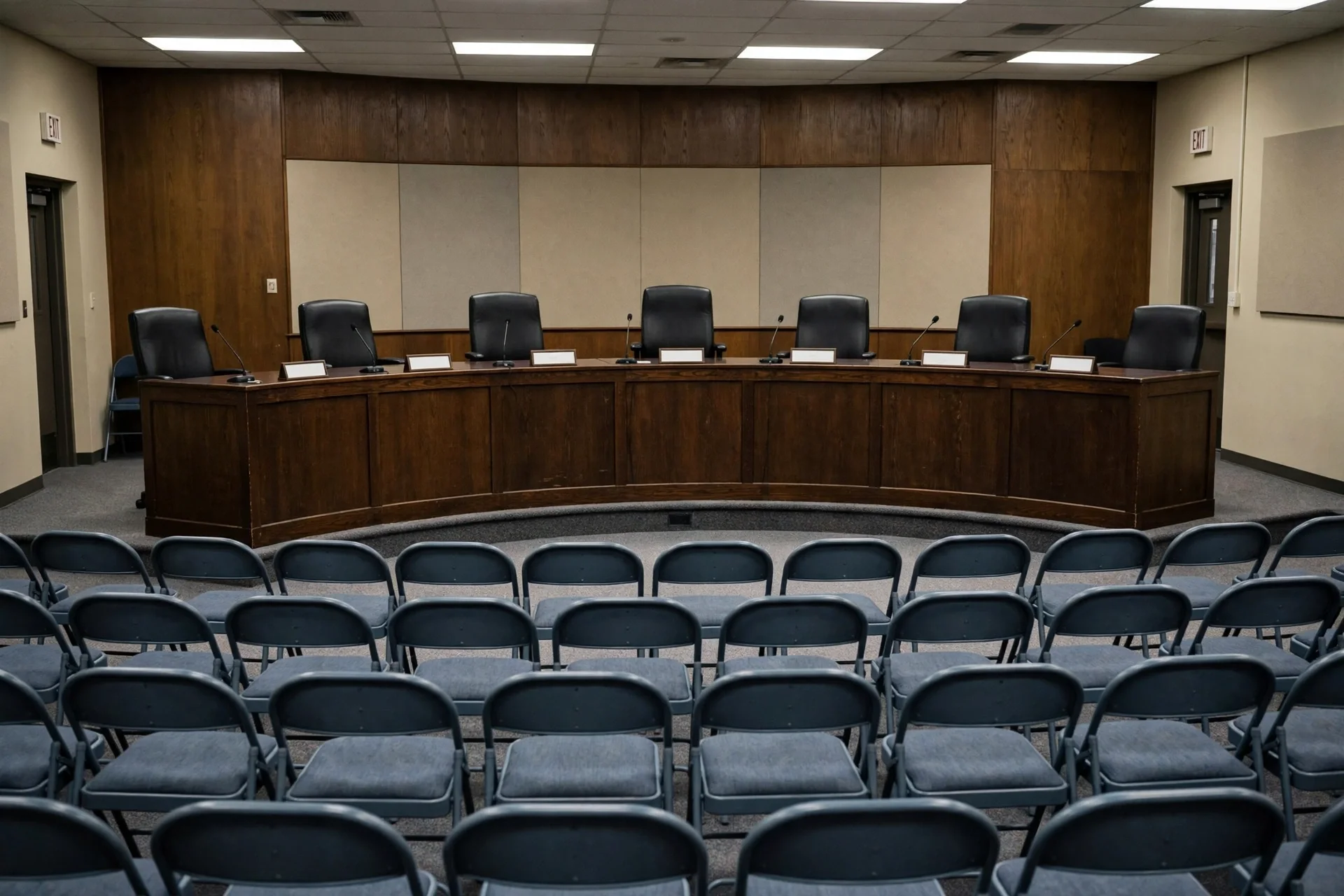
The Common Council is the body most likely to generate a public record if city action is coming. Council members can introduce resolutions, request public hearings, or formally ask the police department for information about its plate reader arrangements. If the administration does not volunteer clarity, the council is the pressure point available to residents and to the public. Whether any council member intends to move on this is not yet known.
The mayor's September 16 statements suggest she does not intend to act without pressure. Whether residents who pushed at the county forum carry that effort into city proceedings is an open question. The county forum produced a concrete result inside two days. A city forum has not been announced. No comparable public process has been put on the calendar.
Residents who want answers have practical options available now. They can contact their Common Council representative directly. They can attend council meetings and raise the issue during public comment periods. They can file Freedom of Information requests for the city's contract with Flock Safety, for any communications between city officials and the vendor, and for records on how and where cameras have been deployed within city limits.
The county made a decision in public, under public pressure, and its officials explained why. The city has not yet been put in that position. Whether it will be depends on whether the people who live there decide to put it there.
Sources and further reading
The Miscellany News, Vassar College (October 1, 2026): "Public outcry reverses Flock camera initiative in Dutchess County"
RFTUV, June Mercer: "Dutchess pulls its Flock cameras after residents push back"
WAMC Northeast Public Radio (September 25, 2026): "Dutchess County DA, Sheriff withdraw support for Flock contract"