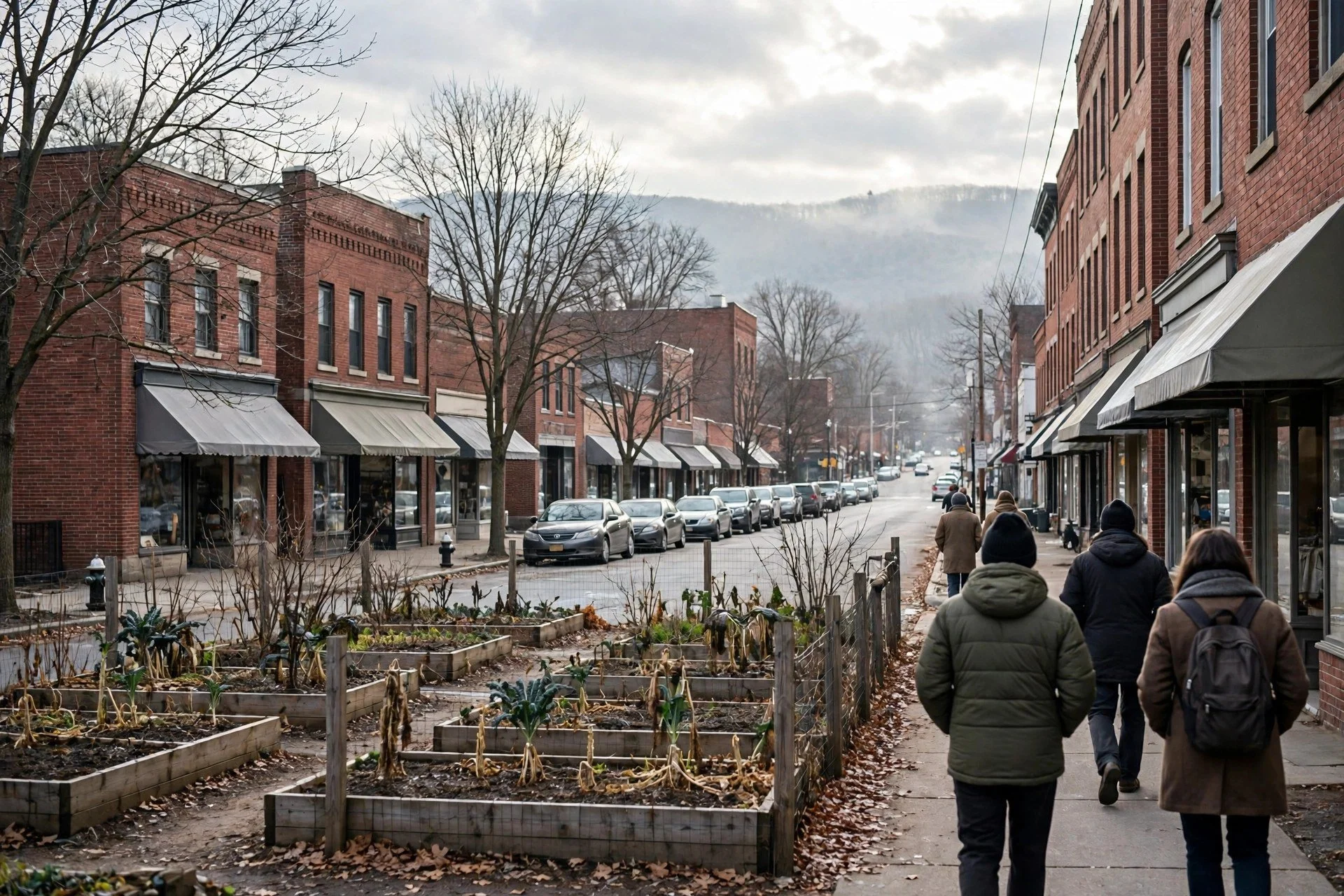
Kingston, New York, where residents designed the Common Futures grant fund and a circle of neighbors chose its first eleven grantees.
By June Mercer | November 28, 2026
Most grant programs tell communities what they can apply for. Kingston Common Futures asked residents to design the fund themselves.
A Fund Built by the People It Serves
Kingston Common Futures is a participatory grant fund based in Kingston, New York. Launched in fall 2024, it is co-led by Kingston community members and incubated as a Model A project by Good Work Institute, which also facilitated its creation. The Novo Foundation provided early support. According to Kingston Common Futures, the program is the first of its kind in the city.
The design process behind the fund was unusual. Eighteen Kingston residents spent nine months shaping how the fund would work, from eligibility rules to the mechanics of decision-making. Good Work Institute facilitated those sessions. The resulting mission: redistribute power, provide support, and democratically allocate resources for a thriving Kingston.
How the Pilot Ran
The pilot launched in January 2025 with $150,000 in seed funding. By the May 1 deadline, 140 letters of intent had arrived. Applicants who submitted full proposals by late June numbered 107. Twenty-three volunteer mentors offered support during the application period.
Thirty-four trained community volunteers reviewed those applications. The top 25 scores advanced to a finalist round, where an eight-member volunteer Decision Circle took over. Over less than two months, that group put in more than 60 hours: reviewing all 25 finalists, watching applicant videos, and conducting interviews. Good Work Institute facilitated a structured democratic process that concluded in a final two-day review. Eleven grantees received awards ranging from $5,000 to $50,000, each with a one-year implementation period and support from the Kingston Common Futures team.
The fund's six-step process runs from an Intent to Apply form through support for application development, community volunteer review, Decision Circle interviews, funding distribution, and a final phase of measuring and learning. All steps run in English and Spanish.
Who Can Apply and Why It Matters
Nonprofits can apply, but so can individuals, community groups, and businesses. Projects must serve the common good in Kingston. The fund prioritizes work that builds community and the commons, advances cultural diversity, racial justice, social equity, and ecological repair, and benefits people who have historically lacked access to resources, including people of color, indigenous folks, immigrants, low-income residents, women, and LGBTQIA+ communities. Local spending is also a criteria factor.
Clay Moodey, Director of Process and Learning at Kingston Common Futures, put the eligibility scope plainly: "It is so rare for grant funding to be available for a business with a community project or for a group of neighbors with a community initiative. The 18 community members who designed Kingston Common Futures stressed over and over that this funding should be open to everyone - not just non-profits."
Next Cycle Opens January 2027
The second grant cycle opens with the Intent to Apply window running January 11 through February 11, 2027. Kingston Common Futures staff will conduct their review in February. Volunteer Decision Circles take over from May 19 through June 30, 2027, including interviews with large-grant finalists. Grantees will be announced and funds distributed in August 2027.
The grant range rises for 2027. Large grants run from $30,000 to $60,000, with four to eight awards totaling up to $250,000. Small grants fall between $7,000 and $15,000, with seven to fifteen awards totaling up to $100,000. The overall range spans $7,000 to $60,000, up from the pilot's $5,000 to $50,000.